I'm Rawal Mushtaq, an Orthopedic Physician Assistant with over a decade in sports medicine, and this is the question I get more than any other, from patients, from lifters, and from people who've heard a belt is either essential or a crutch and can't tell which. I have a more direct stake in the answer than most people writing about it: I herniated my own lumbar disc in an elevator accident, went through the full rehab, and built Body Reapers around what that experience taught me about loading a spine safely.
So here's the honest, clinical version, not the marketing version. A lifting belt can meaningfully reduce your risk of certain back injuries, but only when you already brace correctly and only against specific kinds of loading. It is not a back brace, it does not "hold your spine in place," and it will not save you from bad technique. Below I'll walk through exactly how a belt works, what it genuinely protects against, what it can't do, and the way I coach lifters to use one for injury prevention rather than false security.

The Short Answer: Yes, With Real Caveats
Yes, and as an orthopedic PA, here's the precise version: a lifting belt can help prevent back injury, but only by amplifying your own bracing, not by supporting your spine externally. That distinction, which I built the Body Reapers belt line around, is the entire article in one sentence. The lifters who get hurt wearing a belt are almost always the ones who think the belt is doing the bracing for them.
In my clinical experience, the people who benefit most are lifters moving heavy, near-maximal loads with sound technique who want to reinforce the trunk stiffness they already produce. The people who get a false sense of security are beginners who buckle on a belt before they've ever learned to brace without one. Same tool, opposite outcomes, and the difference is the lifter, not the leather.
A belt is best understood as a load-management tool. It raises the ceiling on how much you can safely stabilize, and it gives your deep core a firm surface to push against. What it can't do is generate stability you haven't built or correct a movement pattern that's already breaking down.
How a Lifting Belt Works: The Intra-Abdominal Pressure Mechanism
What is intra-abdominal pressure (IAP)? Intra-abdominal pressure is the pressure generated inside your torso when you brace your core, created by the diaphragm on top, the pelvic floor on the bottom, and the transverse abdominis and obliques wrapping the sides, all working together to form a rigid, pressurized cylinder around your lumbar spine. A lifting belt raises IAP by giving your abdominal wall a firm surface to push against, increasing trunk stiffness and reducing compressive load on the spinal discs.
Here's that mechanism in plain language. When you prepare for a heavy lift, you take a big breath into your belly and push your abdominal wall outward, like you're bracing to take a punch. A belt gives that outward push a firm surface to press against. Pressing against it raises the pressure inside your torso, which turns your midsection into something closer to a rigid cylinder. A rigid trunk transfers load through the spine far more safely than a soft, collapsing one.
That's intra-abdominal pressure (IAP), and it's the real reason a belt "works." Your deep core muscles, the diaphragm on top, the pelvic floor on the bottom, and the transverse abdominis and obliques wrapping the sides, create a pressurized canister around your lumbar spine. The belt doesn't replace those muscles. It gives them feedback and a wall to brace into, so they generate more pressure than they could against thin air. The result is real and repeatable: when a lifter braces into a belt correctly, the trunk produces more intra-abdominal pressure and the spine carries less of the compressive load at a given weight than it does braced without one.
The practical takeaway: the belt is an amplifier, not a substitute. Wrap it around a lifter who can't brace and you've added a stiff strap to a soft trunk. Wrap it around one who can, and you've raised their stabilization ceiling. If you want a deeper breakdown of belt width and how that changes the brace, our guide on 3-inch vs 4-inch lifting belts covers how belt height interacts with your torso.

What Lifting Belts DO Protect Against
Used correctly, a belt meaningfully reduces a few specific injury risks:
- Excessive compressive load on the lumbar spine during maximal effort. Higher IAP means your trunk shoulders more of the stabilizing work, so the passive structures of your spine, discs, ligaments, facet joints, eat less of the peak compressive force at the top of a heavy squat or deadlift. This is the benefit I'm most confident in clinically.
- Spinal flexion under load ("rounding"). A belt doesn't physically stop you from rounding, but the tactile cue of pushing out against it makes it far easier to feel and hold a neutral, braced position. Most lifters maintain a safer spinal angle belted than unbelted at the same heavy load.
- Loss of stability mid-rep. Maximal lifts are where a small stability leak becomes an injury. The belt makes your hardest brace more repeatable, which matters most on the rep where fatigue is highest.
- Inefficient bracing technique. For lifters still refining the Valsalva-style brace, a belt gives immediate biofeedback, you can feel whether you're pushing out evenly all the way around, not just to the front.
Notice the pattern: every one of these benefits depends on the lifter actively bracing. The belt protects you by making your own stabilization stronger and more consistent, it does nothing for a passive trunk.
What Lifting Belts CANNOT Do
This is the section most belt articles skip, and it's the one that actually keeps you healthy.
- A belt will not prevent a disc herniation caused by bad technique. If you round hard under a heavy load, the belt won't stop the shear and flexion forces that injure a disc. I've treated lifters who got hurt wearing a belt because they trusted it instead of their position. I break down how that flexion-under-load injury actually happens in why your lower back hurts on deadlifts.
- A belt is not a back brace and not a medical orthosis. It supports active bracing during a lift. It does nothing for an existing injury, chronic pain, or a structural problem, and wearing one all day is not a treatment.
- A belt won't fix mobility or motor-control problems. Tight hips, a weak brace, or a deadlift you can't set up neutrally are coaching and mobility issues. The belt masks the symptom; it doesn't address the cause.
- A belt can't make an unsafe load safe. If a weight is beyond what you can stabilize, adding a belt doesn't change that, it just lets you get pinned under a bar you couldn't control.
To be clear about what I'm claiming and what I'm not: this is orthopedic-informed guidance from clinical experience, not a medical diagnosis or a guarantee against injury. If you have current back pain, radiating symptoms, numbness, or a history of disc injury, see a qualified clinician before loading heavy, belt or no belt.
The Right Way to Use a Belt for Injury Prevention
The technique that turns a belt from a liability into a safeguard comes down to a few rules I give every lifter:
- Brace first, then buckle into the brace, not the other way around. The belt should be snug, but you create the pressure. Take your air, push your stomach out against the belt, then execute the lift. The belt is the wall; your brace is the force.
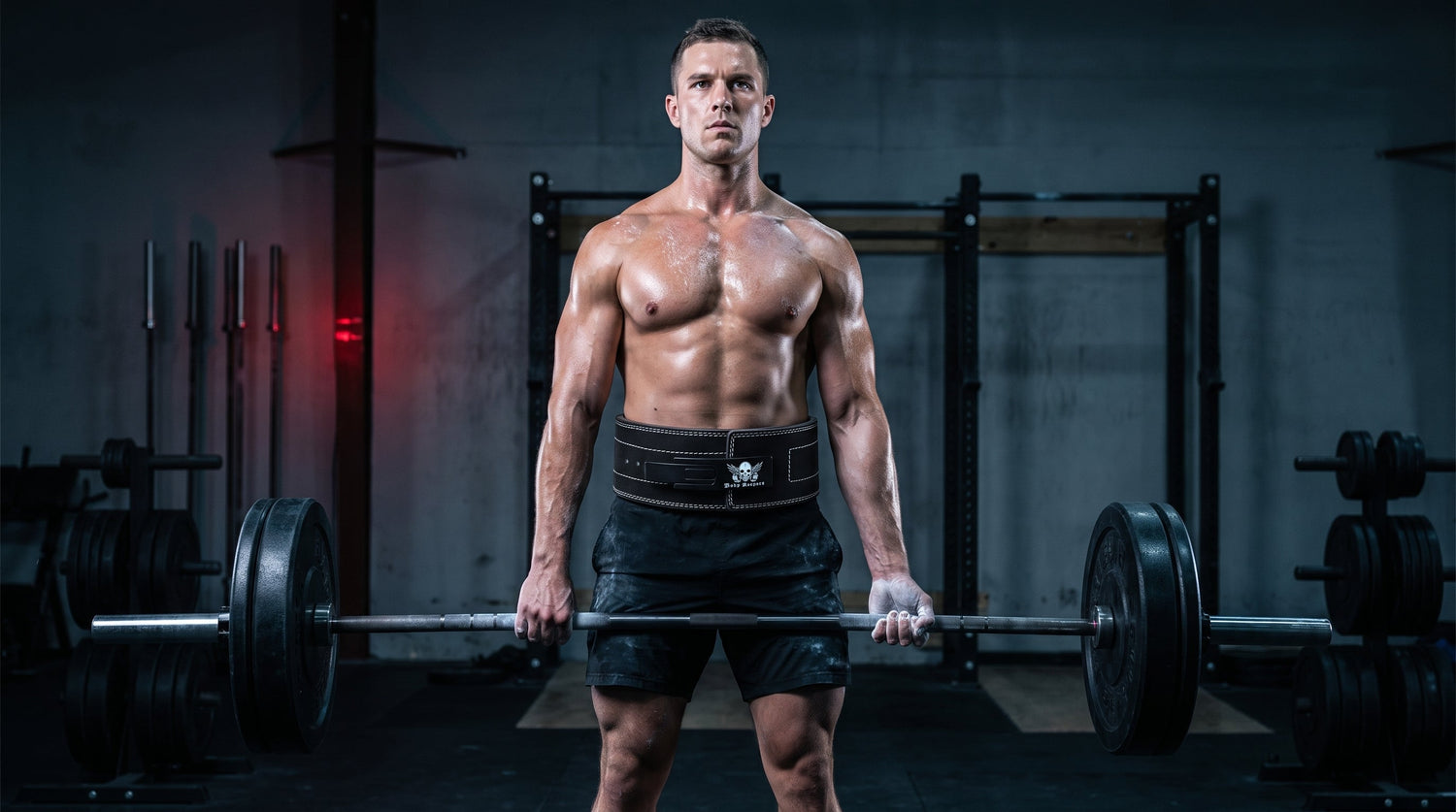
- Position it where you can breathe into it. For most lifters that's around the navel, covering the lower abs and lower back, high enough to support the lumbar curve, not jammed onto the hip bones. Adjust slightly to wherever your hardest, most even brace happens.
- Leave room to expand. It should be tight enough to push against and still let your belly press outward. If you can't take a full bracing breath, it's too tight and you're choking off the very pressure you're trying to build.
- Don't wear it for everything. Save the belt for heavy or near-maximal working sets. Train your warm-ups and lighter accessory work raw so your brace keeps developing on its own. A belt worn for every set, every rep, trains dependency.
- Match belt stiffness to the job. A precise, repeatable lever belt earns its place on top sets; a more forgiving leather belt suits a wider range of training. If you're deciding between the two closure types, lever vs prong belts breaks down which fits your training.
For most serious lifters chasing repeatable heavy support, a stiff 10mm lever belt snaps to the exact same tightness every rep, which is precisely what you want at maximal effort, where consistency is safety. If you're still building the bracing habit and want a belt that's comfortable across more of your training, a 7mm double-prong leather belt breaks in faster and adjusts more easily between sets. Either way, the belt only protects you to the degree you brace into it.

My Story: A Herniated Disc, Rehab, and Why I Built Body Reapers
I don't write about back injury from the outside. Years ago I herniated a lumbar disc in an elevator accident, not under a barbell, but the rehab process taught me everything about how a spine handles and recovers from load. I went through the conservative-management road myself: the early flare, the careful reloading, the slow rebuild of trunk strength and bracing mechanics that I'd spent years teaching patients.
Coming back to the bar, I paid attention to belts in a way I never had as a clinician. The cheap ones dug in wrong, sat at the wrong height, or were so stiff they fought my brace instead of supporting it. So when I built Body Reapers, the belts came first, designed around how a braced trunk actually generates pressure, sized and shaped to support the lumbar curve rather than crush it. You can read more about that background and our clinical approach on our about us page.
That experience is also why I'm so blunt about a belt's limits. A belt didn't fix my back, progressive loading, bracing mechanics, and patience fixed my back. The belt is what helped me load safely once the foundation was rebuilt. That's the right order, and it's the order I want every lifter reading this to respect.
When to Use a Lifting Belt vs. When NOT To
A simple clinical decision framework:
Use a belt when:
- You're lifting at roughly 80%+ of your max on squats, deadlifts, or heavy presses.
- You already brace well without one and want to reinforce that brace at heavy loads.
- You're doing top sets, singles, or competition-style attempts where stability has to be maximal and repeatable.
- You're past the beginner stage and have built a real raw brace to amplify.
Skip the belt when:
- You're warming up or doing lighter, higher-rep accessory work.
- You're brand new to lifting and haven't yet learned to brace without one. Learn the raw brace first, then add the belt once you're moving heavier loads with solid technique.
- You have current back pain or symptoms you haven't had assessed, get evaluated first.
- You'd be using it to push past a load you can't actually stabilize.
The throughline: a belt is for reinforcing good lifting at heavy loads, not for rescuing bad lifting or replacing the brace you should be building underneath it. For a deeper look at the exact load thresholds and deadlift scenarios where a belt earns its place, see our guide on when to use a belt for deadlifts.
Frequently Asked Questions
Do lifting belts really prevent back injuries? A lifting belt reduces the risk of spinal compression and stability failure during near-maximal lifts by increasing intra-abdominal pressure when you brace into it. It does not prevent injuries caused by poor technique and is not a substitute for learning to brace without one.
Can a lifting belt cause a back injury? Not directly, but relying on a belt instead of your own bracing can. Lifters who trust the belt to "hold" their spine and neglect technique can get hurt under loads they couldn't truly stabilize. The belt amplifies a brace; it doesn't create one.
Should beginners wear a lifting belt to protect their back? Usually not at first. Beginners should learn to brace and lift with a neutral spine raw, then add a belt once they're moving heavier loads with solid technique. Starting too early can build dependency on external support instead of real trunk strength.
Where should a lifting belt sit to protect your lower back? For most lifters, around the navel, covering the lower abdomen and lower back so it supports the lumbar curve without jamming into the hip bones. Position it wherever you can take a full bracing breath and push out hardest against it.
Is a tighter belt safer? No. A belt so tight you can't breathe into your brace actually reduces the intra-abdominal pressure you're trying to create. It should be snug with room to expand your belly against it.
The Bottom Line
Do lifting belts prevent back injury? Yes, and as an orthopedic PA who has rehabbed spinal injuries (including my own) for over a decade, my clinical answer is that a belt genuinely lowers the risk of compressive and stability-related spinal injuries, when you already brace correctly, at heavy loads, with sound technique. A belt amplifies your own intra-abdominal pressure and makes your hardest brace more repeatable. What it can't do is fix technique, replace a brace you haven't built, or make an unsafe weight safe. Respect that order and a belt becomes one of the smartest pieces of insurance in your gym bag.
If you're lifting heavy and ready to reinforce your brace where it matters most, the 10mm Lever Belt is the belt I reach for on top sets, stiff, precise, and repeatable rep after rep. Brace first, buckle into it, and lift like the belt is backing up your technique, not replacing it.
Recommended Product
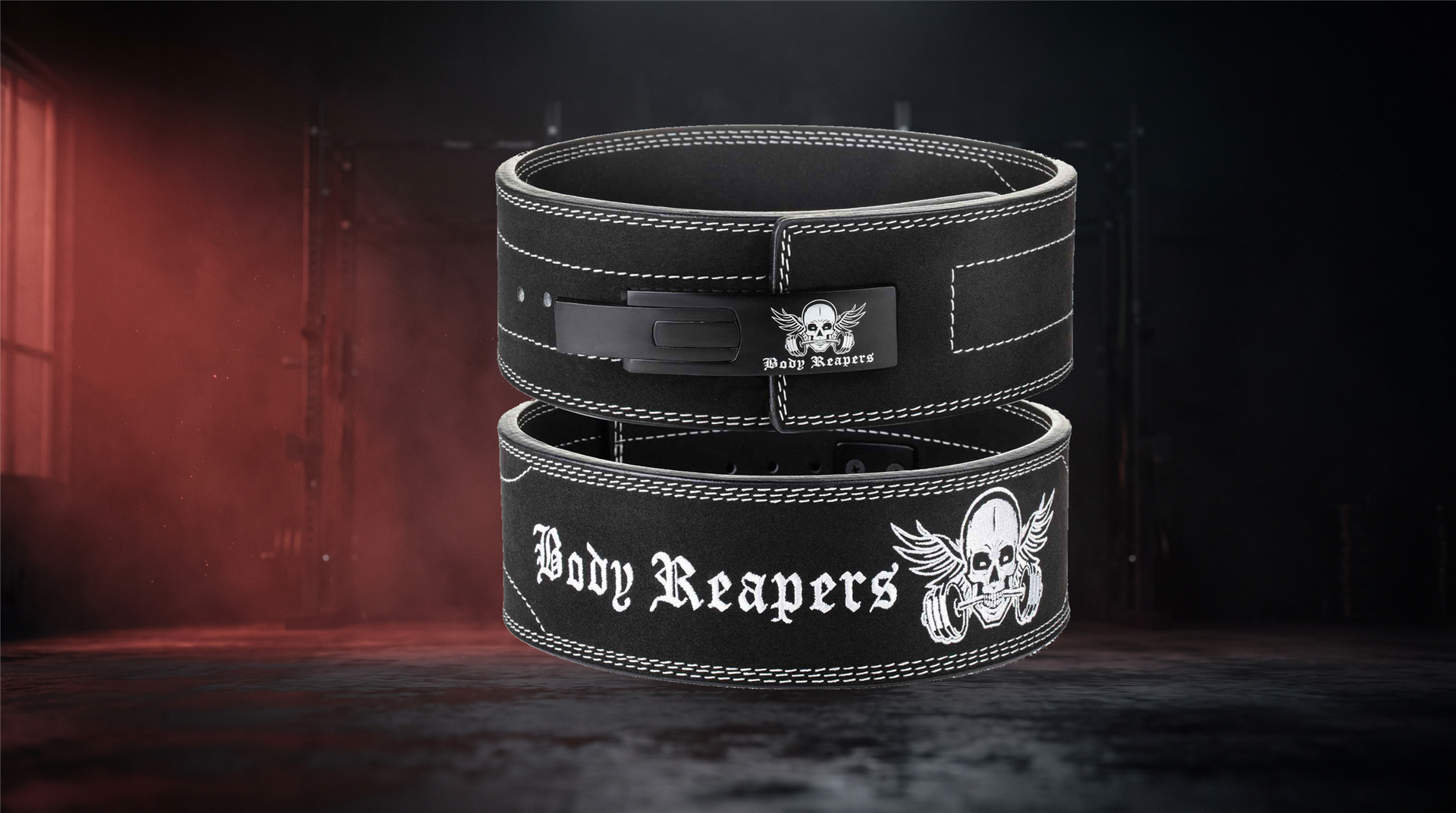
10MM Lever Belt (our 10mm competition-grade lever belt, $79), The belt I recommend for serious lifters who want maximum, repeatable support on their heaviest sets. The lever closure snaps to the exact same tightness every single rep, so your brace is identical on your last heavy single as it was on your first, which is precisely what you want when stability equals safety. At 10mm it delivers aggressive lumbar support for max-effort squats and deadlifts. Pair it with a real brace and it's the most consistent injury-prevention tool you can wear at heavy loads. (Note: choose the size that lets you brace comfortably with a hole to spare.)
Shop the Body Reapers 10MM Lever Belt →
Still building your brace and want an easier-adjusting option? The 7mm double-prong leather belt breaks in faster. Or compare the full Body Reapers weightlifting belt range.
Recommended Gear


Leave a comment
This site is protected by hCaptcha and the hCaptcha Privacy Policy and Terms of Service apply.