Why Standard Belt Advice Fails Women
Before I built Body Reapers, I spent years treating sports injuries. One pattern I saw constantly: women buying "unisex" belts that were too loose at the core, too rigid in the wrong places, and sized for an average male torso. They'd come back to the clinic with lower back pain after deadlifts, convinced belts didn't work for them. The belt worked fine. It was just engineered for someone 4-6 inches taller and with different pelvic anatomy.
A lifting belt doesn't protect you. It reminds your nervous system to brace. When the belt doesn't fit your ribcage-to-hip distance, that reminder never lands properly. Your core stabilization suffers. The load transfers to your spine instead of the pressure chamber your body actually created. That is why sizing isn't cosmetic. It's biomechanical.
The Body Mechanics Most Lifting Content Ignores
Your pelvis shapes your bracing. Women's pelvises are wider and sit at a different angle than men's, with the pelvic tilt naturally more anterior. This changes where you generate intra-abdominal pressure (IAP) and how a belt should contact your torso.
When you breathe in and brace for a heavy squat or deadlift, your diaphragm drops, your abdominal wall tenses, and air pressure inside your abdomen increases. That pressure is what actually stabilizes your spine, not the belt. The belt's job is to give your abdominal muscles something to brace against, making that pressure system tighter, more efficient, and more repeatable across every rep.
A belt that sits too high compresses your ribcage. Too low, and it misses the sweet spot where your obliques and transverse abdominis can generate force. For most women lifters, a competition-standard 4-inch panel hits that sweet spot. What matters more is placement: on a shorter torso it has to sit lower so it makes full contact without riding up into the ribs.

Lever vs. Prong: Which Type for Women?
The mechanism question is the same for all lifters, but the priority shifts when you're managing fit.
A lever belt maintains consistent tension across every rep. You set it once, and it stays locked. The lever mechanism is ideal if you're doing heavy competition lifts or if you're training the same depth repeatedly (squats, for example). The trade-off: less adjustability if you need to loosen between exercises or if your torso circumference changes slightly with your cycle.
A prong belt gives you dial-in control. You can micro-adjust tension between a deadlift max attempt and a bench press or squat variation. For women whose training includes accessory work with different bracing depths, this flexibility matters.
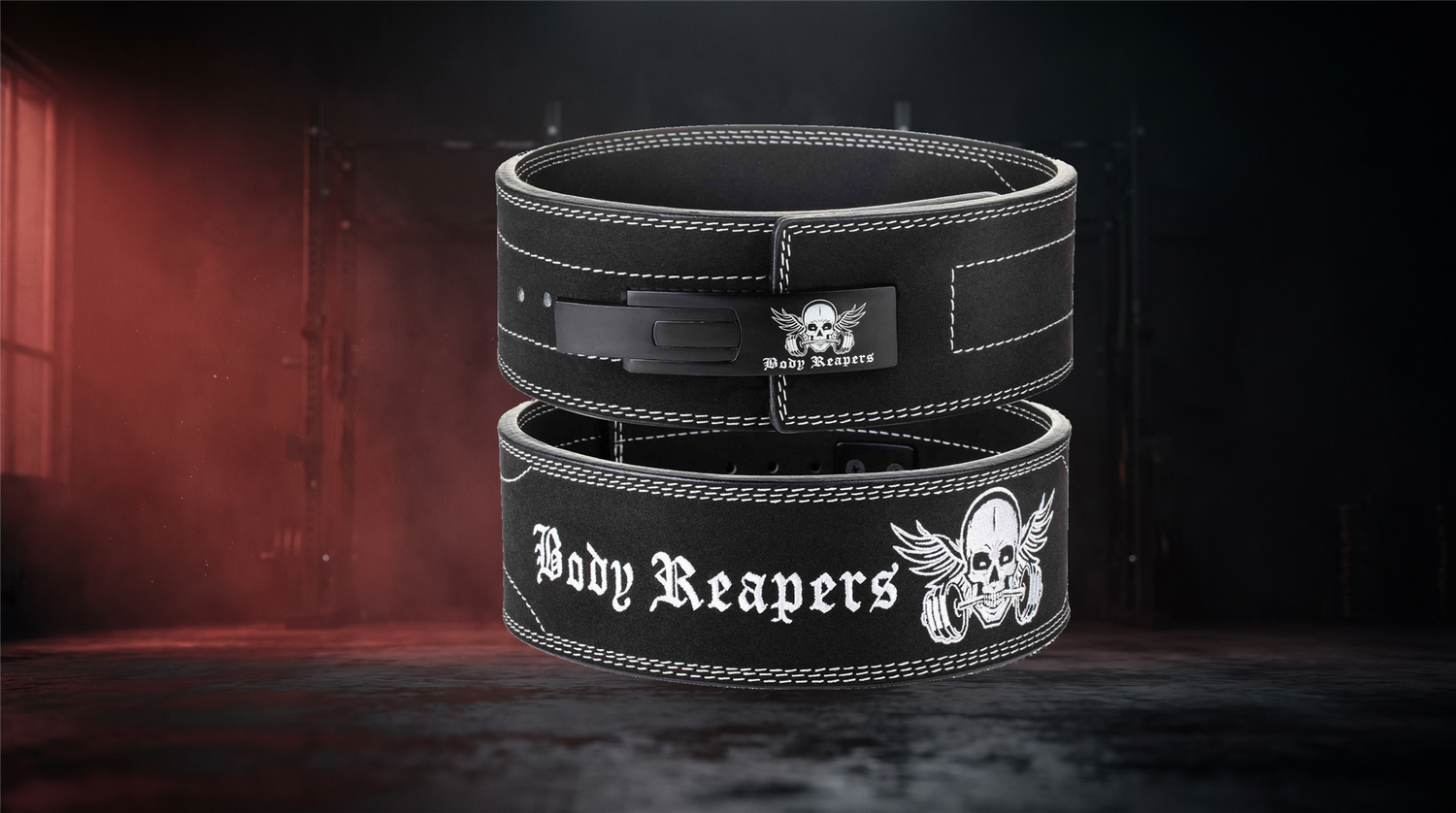
My clinical judgment: if you're competing or training primarily heavy compound lifts, a lever belt works. If you're rotating through accessory variations in one session, a prong gives you the freedom you might need. If you want the full breakdown of how these two options stack up, our lever belt vs prong belt comparison walks through every angle. The Body Reapers 10MM Lever Belt is worth the investment if your training is structured and rep-pattern consistent. The engineering is built for consistency: every rep feels identical, which teaches your nervous system to generate the same bracing pattern.
Sizing: The One Measurement Everyone Gets Wrong
Standard sizing charts measure your waist. That's incomplete for women lifters.
You need three measurements:
- Underbust circumference (directly under your ribcage, where the upper edge of the belt sits)
- Waist circumference (at belly button level, where most of the belt contacts)
- Torso length from ribcage to hip crest (this determines whether a standard or wide belt is right)
Why this matters: if you're buying off a waist measurement alone, a standard belt might be too tall for your torso, digging into your ribcage instead of supporting your pressure point. A narrow belt on someone with wider hip-to-rib spacing won't give you full surface contact.
A competition-standard 4-inch belt is the right width for most female powerlifters, the width the sport is built around. What changes is placement: on a shorter torso it has to sit lower so it doesn't crowd the ribcage. A tight fit at the waist also matters more than it does for male lifters. A belt that slips even slightly during a heavy squat kills your bracing efficiency.

The Strength Progression Angle Most Coaches Skip
Beginners often think belts are for advanced lifters only. That's wrong. A belt teaches you how to brace properly, and learning correct pressure management at lighter weights transfers to heavier loading.
If you're squatting at 65% of your max, a belt shows your body the pressure pattern you want to replicate at 90%. You learn the neural pathway. When you get heavier, your nervous system already knows the job. The belt just reinforces it.
For women returning to training after pregnancy or significant time off, this is especially critical. Your core mechanics are the same, but your confidence in spinal stability sometimes isn't. A well-fitted belt that actually contacts your torso properly rebuilds that confidence rep by rep.
Real Specs You'll Actually Care About
The Body Reapers 10MM Lever Belt costs $79.00. Comparable competition-grade 10mm lever belts from the big names run well over a hundred dollars for the same build. The reason we can price ours lower: in-house manufacturing cuts the middleman markup. You're paying for the product itself, not the distribution layers.
10mm thickness is the standard for heavy compound lifts, giving adequate support without over-bracing, which can lead to compensation patterns in your shoulders or knees. If you're under 165 pounds and doing speed work or supplemental lifts, a 7mm option exists in our catalog. If you're over 200 pounds or pressing heavy, 10mm is your baseline.
The lever mechanism doesn't require you to be strong to tighten it (common misconception). Close it until you feel snug, not crushing, and confirm you can still take a full breath, that's the cueing I use in clinic, and it works for every lifter regardless of size.
The Fit You're Actually Looking For
When you put the belt on, stand upright and do three things:
- Bend forward slightly. The belt should stay in contact with your front core without rolling or gapping.
- Breathe in and brace as if you're about to squat. The belt should feel like it's supporting that pressure, not fighting it.
- Unload the pressure (exhale). The belt shouldn't leave marks or cause discomfort.
If any of those feel wrong, if the belt is riding too high, cutting into your ribs, or leaving a red line after five minutes, sizing is the issue, not the belt. Return it. Use the measurements I listed above and try again.
Most women get the right fit on the second try. The first attempt is usually either too large (bought to standard unisex charts) or too small (bought out of self-consciousness about needing support). The correct fit is neither. It's invisible until you load it.
When Women Actually Stop Using Belts
I've seen two patterns in clinic. One: women who use belts on heavy compound lifts but never on accessories, then develop asymmetrical bracing habits. The solution is consistency: if you're bracing, be intentional about which lifts get the belt. Decide based on load and rep range, not on ego.
Two: women who belt everything and never learn to brace without one. Less common, but it happens. A belt is a tool for heavy loading and pattern reinforcement, not a permanent solution. When you're training under 80% of your max, you probably don't need it. Save it for the work that actually demands it.
About the Author
Rawal Mushtaq is an Orthopedic Physician Assistant Certified (OPA-C) with 10+ years in sports medicine. He founded Body Reapers after his own herniated disc injury and designed every product based on clinical knowledge, not marketing. This article reflects his clinical perspective on women's lifting mechanics and injury prevention.

Our Pick for Women's Heavy Lifting
The 10MM Lever Belt is engineered for consistent bracing across heavy compound lifts. The lever mechanism maintains uniform tension rep after rep, which matters for women lifters who need reliability when training to max. Designed by an orthopedic PA and tested by IFBB professionals and world-record powerlifters, it's built for strength that lasts.
Browse our weight lifting belts collection for other belt options.
Recommended Gear


Leave a comment
This site is protected by hCaptcha and the hCaptcha Privacy Policy and Terms of Service apply.