The lifting belt is your key to spinal safety and maximal output. It is not a simple back support. It is an external core. The choice between a 3-inch vs. 4-inch lifting belt is critical. A single inch affects comfort, leverage, and performance. As a professional trainer, I confirm this is the most common belt question. You must choose the right belt for your body and goals. This expert guide provides a clear decision path.
The belt's width directly impacts the bracing area.
- A wider belt (4 inches) provides a large surface for pushing. This maximizes IAP.
- A narrower belt (3 inches) offers less surface area. It gives more movement freedom.
Should You Choose a 3-Inch or 4-Inch Lifting Belt?
This trade-off is central to the debate over 3-inch vs. 4-inch lifting belts.
When a 3-Inch Belt is the Smart Choice
Go with a 3-inch belt if:
- You have a short torso (a small rib-to-hip span).
- You're a smaller-framed athlete or a woman who wants mobility.
- Your training style includes Olympic lifts, cleans, and snatches, movements that demand hip and torso flexibility.
A narrower belt reduces rib or hip interference. It's more comfortable for deep bends and front squats.
Some lifters report that a 4-inch belt digs into their ribs or restricts movement, a strong cue that a 3-inch width would suit them better.
Why Many Lifters Use a 4-Inch Belt
A 4-inch belt is the go-to width for most coaches and lifters. It offers:
- Broader surface area across the mid-back and lower back.
- Stronger support during heavy squats, deadlifts, and presses.
- Greater adaptability as you grow stronger.
According to expert sources, for general strength training, a 4" wide belt fits most lifters. If you're lifting near your limits or plan to, a 4-inch belt gives you stability when it matters.
Recommended: What Size Weightifting Belt Should I Get?
Six Clear Differences Between the Two Widths
Feature 3-Inch Belt 4-Inch Belt
Torso fit Better for short torsos Better for medium/long toros
Mobility Higher Slightly lower
Support area Lower back only Mid + lower back
Suitability for heavy lifts Good for moderate loads Excellent for heavy loads
Market availability Less common Widely available
Best for beginners Only if torso is short Usually the safer default
The 4-Inch Lifting Belt: Built for Maximum Support
The 4-inch belt is the standard for a reason. Its consistent width provides a large surface area to brace against.
Choose a 4-inch belt if:
- Your torso measures more than 3 inches from your rib cage to your hip bone.
- Your training focuses on barbell back squats.
-
You compete in powerlifting under federations like the IPF.
This belt excels in support. The wide coverage creates a solid wall for your core to push against, ideal for heavy, structured lifts.
The drawback is mobility. Lifters with shorter torsos often find the 4-inch width presses into the lower ribs during squats and restricts hip movement on deadlifts.
The 3-Inch Lifting Belt: Designed for Mobility
The 3-inch belt solves a specific problem: restricted movement. Its narrower profile allows for a greater range of motion.
Choose a 3-inch belt if:
- Your torso is under 2.5 inches.
- Deadlifts are a key part of your routine.
- You engage in Olympic lifts or CrossFit workouts that demand deep positions.
This belt's advantage is clear. It enables a proper deadlift setup without painful digging. You can maintain a neutral spine more easily.
The trade-off involves support. The smaller bracing surface may not feel as secure for one-rep max squats.
Also Read: Leather vs Nylon Lifting Belts: Which One Is Right for You?
Your 5-Step Selection Guide
- Measure Your Torso. Find the space between your bottom rib and hip bone. Under 2.5 inches leans toward a 3-inch width. Over 3 inches, a 4-inch belt suits.
- Prioritize Your Lifts. Squat-focused? Prefer 4-inch. Deadlift-focused? Prefer 3-inch.
- Consider the Taper. A tapered belt often serves as the perfect compromise, especially for lifters with average torsos who feel discomfort with a uniform width.
- Select Your Closure. Lever buckles offer quick adjustments. Prong buckles deliver proven security. This choice is personal, not performance-critical.
- Test the Feel. Try a friend's belt. Notice where it sits during a bodyweight squat and deadlift setup.
A Smarter Choice: The Tapered Belt

You do not have to choose between support and mobility. A tapered belt offers a hybrid design: 4 inches across the back for core support, narrowing to 3 inches in the front for rib clearance.
This design eliminates the common pain point of rib cage digging. It delivers full spinal support while granting the comfort needed for a deep hinge.
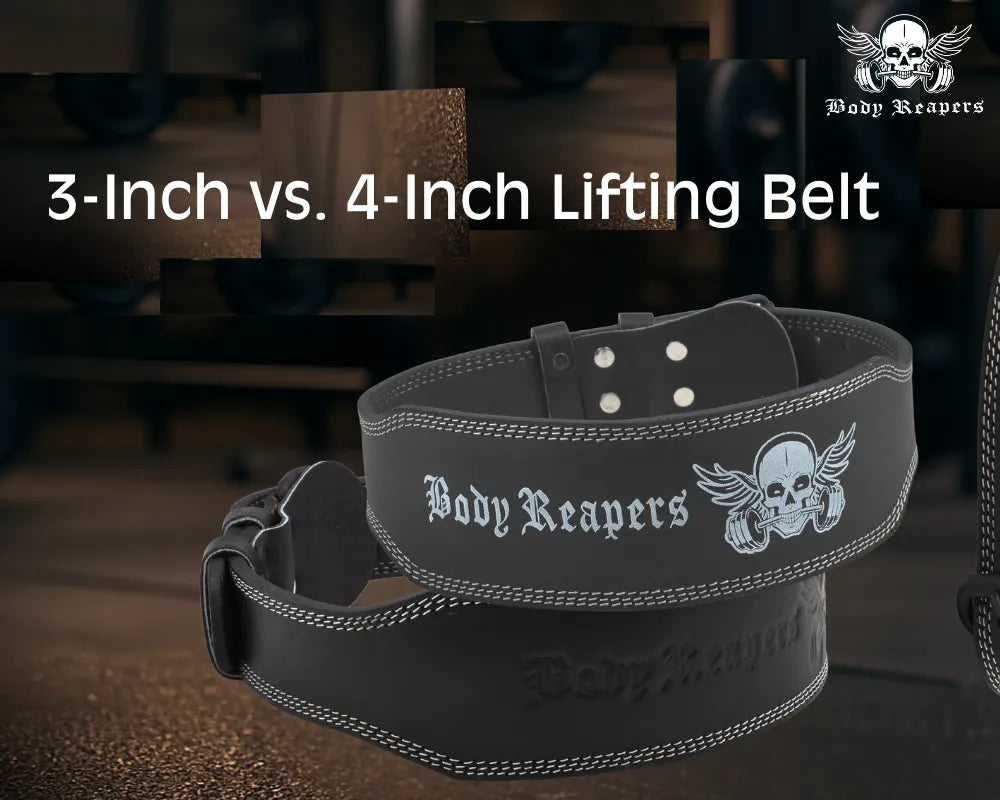
Body Reapers engineered its premium belt with this exact taper. The 7mm leather construction and double-prong closure provide a secure platform for bracing, without compromising deadlift positioning.
FAQ’s
Is a 4-inch belt bad for deadlifts?
For many, yes. The rigid top edge can press into the rib cage, limiting your ability to get into a strong starting position. A 3-inch or tapered belt typically works better.
I'm 5'7". Which belt width is correct?
Measure your torso. Height offers a rough guess, but the tape measure gives the proper answer. A tapered belt is a safe, versatile option for this height.
Can I use a 3-inch belt in a powerlifting meet?
Yes. Federations like the IPF permit 3-inch belts. The 4-inch rule defines the maximum allowed width.
Why does torso length matter?
A belt needs space to sit flat against your torso without hitting your ribs or hips. The wrong length will cause discomfort and hinder your technique.
Should a beginner start with a 4-inch belt?
Most beginners find a standard 4-inch or a tapered belt to be a versatile starting point. It builds good bracing habits and works for a wide range of exercises.
Your gear should empower your training, not hold it back. The correct belt width matches your skeleton and your program. A 4-inch belt provides a bedrock of support for squats. A 3-inch belt unlocks mobility for deadlifts. A tapered belt combines these benefits into a single intelligent tool.
Stop letting an ill-fitting belt sabotage your gains. The Body Reapers Tapered Lifting Belt is built to support you throughout your journey.
The Final Verdict
The 3-inch vs. 4-inch lifting belt debate has a straightforward answer.
- 4-inch belts are ideal for superior support, provided they fit your torso length.
- 3-inch or tapered belts are the better, safer choice if a 4-inch belt causes discomfort or restricts your squat.
- The goal is to enhance your lift, not hinder it with an ill-fitting belt.
Use a 4-inch belt for optimal support if it fits well; otherwise, a 3-inch belt is the correct and safer alternative.
Recommended Gear




Leave a comment
This site is protected by hCaptcha and the hCaptcha Privacy Policy and Terms of Service apply.