Walk into any gym, and you will see them. Straps dangling from barbells. Wraps peeking out from under sleeves. They look almost identical from a distance. Both involve fabric. Both go near your wrists. Both sit in the same section of the gym bag.
But they are not the same thing.
New lifters constantly grab the wrong one. They buy straps, thinking their wrist will stop hurting. They buy wraps in hopes of fixing their deadlift grip. Then nothing changes. They blame themselves. But the problem was the tool, not them.
Here is the truth. Weight lifting straps vs wrist wraps is not a competition. It is a distinction. One helps you hold the bar. One helps you push it. Mix them up, and you waste your money.
The Core Difference Between Lifting Straps and Wrist Wraps
The difference between lifting straps and wrist wraps comes down to one question. Where does your lift fail?
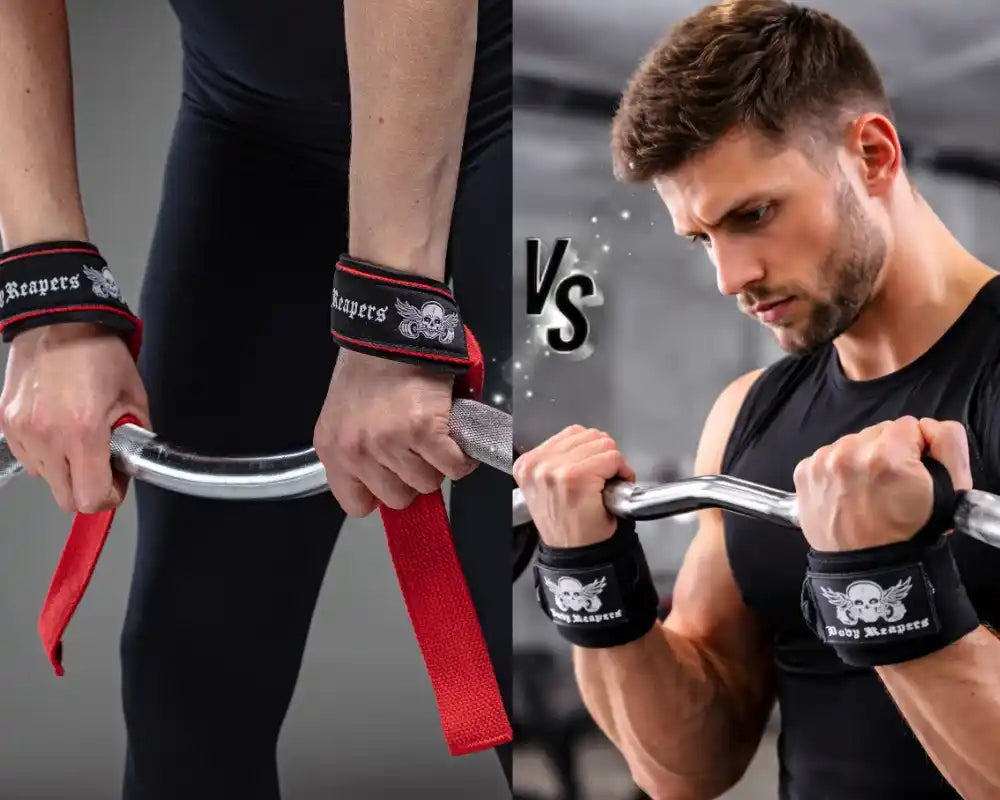
Lifting straps connect your hand to the bar. They loop around the barbell and your wrist. When your grip gives out, the strap holds the weight. Your fingers stop being the weak link.
Wrist wraps support your wrist joint. They wrap tightly around the joint itself. They stop it from bending backward under heavy loads. This creates a stable platform for pushing.
Straps fix grip failure. Wraps fix wrist instability. That is the whole distinction.
Related: Weight Lifting Straps: Complete Guide to Benefits, Usage & Top Picks
Leather vs Cotton vs Nylon Lifting Straps: The Ultimate Material Guide
What Lifting Straps Actually Do
Lifting straps have been around forever. The design is simple. A loop of cotton, nylon, or leather. You put your hand through. You wrap the tail around the bar. You grip down. The strap tightens as you pull.

Lifting straps that increase grip strength function similarly to a safety rope. The strap keeps you attached to the bar even if your forearms burn out. Research shows that grip strength correlates with shoulder function. Using straps on heavy pulls keeps you secure and reduces injury risk.
Where they shine:
Deadlifts. Barbell rows. Rack pulls. Shrugs. Pull-ups. Any movement where you pull weight toward you and grip becomes the limiting factor.
Your back can handle more weight than your hands. That is just biology. The flexor muscles in your forearms fatigue fast. Straps let your back do the work it is capable of.
Where they do nothing:
Bench press. Overhead press. Dips. Any pushing movement. Straps do not stabilize joints. They do not stop wrist pain. They only attach you to the bar.
What Wrist Wraps Actually Do
Wrist wraps are different. They are made from stiff material. Some are flexible. Some are rigid enough to feel like a cast. You wrap them tight around the wrist joint itself.

Wrist wraps for support compress the joint. They prevent hyperextension. When you bench press or overhead press, the bar wants to push your wrist back. Wraps stop that movement cold. Studies confirm wrist wraps act as protective and performance-enhancing devices in powerlifting.
Where they shine:
Bench press. Overhead press. Push press. Heavy dumbbell work. Any movement where the weight pushes back against your wrist.
The wrist is not designed to handle heavy loads at extreme angles. When the bar sits in your palm, and you press, the wrist wants to bend back. That bend creates instability and pain. Wraps prevent it.
Where they do nothing:
Deadlifts. Rows. Pull-ups. Wraps do not help you hold the bar. They sit on your wrist joint, not on the bar. They cannot catch a slipping grip.
Explore More: What Are The Benefits of Wrist Wraps and Why Lifters Need
How to Choose Wrist Wraps: Avoid Pain and Improve Your Lift
Breaking It Down By Exercise
Let us walk through the main lifts. This is where theory meets reality.
Deadlifts
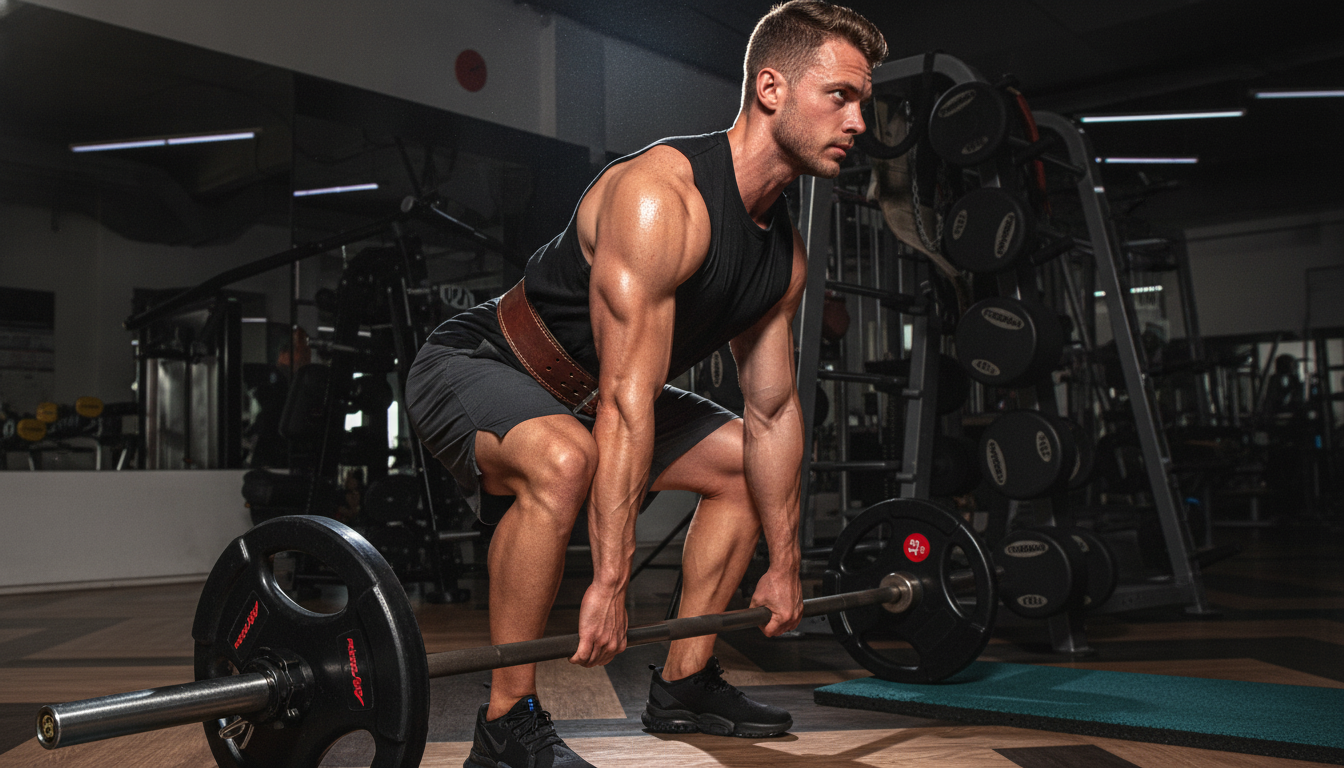
You pull the bar from the floor. The weight gets heavy. Your grip starts slipping. You need straps. Wraps will not help here at all. They sit on your wrist while the bar rolls out of your fingers. Which is better for deadlifts, straps or wraps? Straps, every time.
Bench Press
The bar is lowered. You raise it. You flex your wrist. You feel a sharp pain in your forearm. Wraps are necessary. Straps don’t help stabilise the wrist. Wraps secure that joint, allowing you to press painlessly.
Barbell Rows
You bend over. You pull the bar to your chest. Your back is fine, but your forearms burn. You need straps. Let your lats do the work while straps handle the grip.
Overhead Press
You push the weight above your head. Your wrist wobbles under the load. You need wraps. Keep that joint neutral and stable.
Pull Ups
You hang from the bar. Your grip gives out before your back is tired. You need straps. Loop them over the bar and keep pulling.
Lifting Straps vs Wrist Wraps for Bodybuilding
Lifting straps vs wrist wraps for bodybuilding depend on the muscle group.
For back and bicep day, choose straps. They take grip out of the equation. You fully fatigue your lats on rows and pulldowns without your hands quitting first.
For chest and shoulder day, choose wraps. They support your wrists during presses and lateral raises. This keeps the focus on your delts and pecs, not on wrist pain.
Bodybuilders benefit from owning both. Each serves a specific muscle group.
Can You Use Lifting Straps and Wrist Wraps Together?
Yes. Some lifters do.
Put wraps on first. Tighten them where you want them. Then put straps on over top.
This works for strongman events. It works for heavy deadlifts when you also want wrist stability. It works for high-volume sessions with mixed movements.
Most people do not need both at once. But the option exists.
Do Wrist Wraps or Straps Weaken You?
People worry about this constantly. “If I use straps, will my grip get weak?”
Here is the truth backed by research. Using lifting straps vs wrist wraps strategically does not weaken you. It lets you train harder. The key is not using them all the time.
Use straps on your heaviest sets or high volume work. Skip them on warm-ups and lighter days to keep your grip challenged.
Use wraps when the weight threatens your wrist alignment. Skip them on lighter pressing so your stabilizers keep working.
You can also do direct grip work. Farmer carries. Dead hangs. Plate pinches. Wrist curls. This keeps everything strong.
Think of them as tools, not crutches. You do not use a hammer for every job. You do not need straps or wraps for every set.
Lifting Straps or Wrist Wraps: Which One Do You Need First?
This is the question everyone asks. Lifting straps or wrist wraps, which one do you need first?
Look at your training history.
Buy lifting straps if:
- The bar slips on deadlifts
- Your forearms burn out before your back
- You want more volume on pulling movements
- Grip strength limits your progress
Buy wrist wraps if:
- Your wrist bends back on the bench press
- Overhead pressing hurts
- Heavy pushes feel unstable
- You want joint protection for max lifts
If you do both types of lifting regularly, you will eventually own both. That is normal.
Cheap straps tear. Cheap wraps fail. But gear built with orthopedic logic is different. However, orthopaedic logic-built equipment is different. We’ve rebuilt bodies, so we know exactly how your joints break under stress. Because of this, our wraps use medical-first principles to lock your wrist in a neutral position, and our straps prevent grip failure without slipping.
Your joints deserve better than influencer advice. They deserve gear that stabilizes, protects, and lasts.
Check out our Lifting Straps and Wrist Wraps, built for real use and guaranteed for life.
Recommended Gear


Leave a comment
This site is protected by hCaptcha and the hCaptcha Privacy Policy and Terms of Service apply.