A lifter switches from conventional to a wide stance, adds weight to the bar within a few weeks, and then wonders why a new area of the hip feels tight that never bothered them before. Sumo deadlift technique is not a wider version of the conventional pull. The hip rotates differently, the torso sits at a different angle, and the muscles doing the most work shift from one lift to the other. Treating sumo as "conventional, but wide" is a common setup mistake, and it is why many lifters abandon the stance after a few sessions instead of adapting to it properly.

Sumo vs. Conventional: The Biomechanics Are Not the Same Lift
Sumo pullers maintain a noticeably more upright torso position at the start of the lift than conventional pullers do, with a reduced forward lean through the trunk, a difference in posture documented in deadlift biomechanics research going back to Escamilla et al. (2000) and Piper and Waller (2001). That upright start is not a style choice. It is a direct consequence of standing wider and turning the toes out, which changes the geometry between the hips, the bar, and the spine before the bar ever leaves the floor.
A 2025 biomechanical comparison of the two deadlift styles found that sumo deadlifts drive significantly greater hip external rotation than conventional deadlifts, concentrated in the earlier part of the pull. That rotation demand is exactly why lifters who have tight hip rotators feel the sumo stance in a place they never notice during conventional pulling. It is a mobility requirement, not a flaw in the lift. The same research found the muscle activation pattern differs too: conventional deadlifts put more work through the erector spinae and tibialis anterior during the setup and drive phases, while sumo deadlifts ask more of the vastus lateralis early in the pull because the knees start more bent. Neither pattern is "safer" in the abstract. Each one simply works through different tissue, which is why the gear and the cueing that fit a conventional pull do not automatically fit sumo.
The Brace-and-Belt Decision for a Wide Stance
Because the sumo setup starts with a more upright spine, the belt is doing a different job than it does in a conventional pull. A conventional lifter uses the belt to resist a forward-leaning torso under load. A sumo lifter uses the belt mainly to give the core something firm to push against while the hips do the rotational work of the pull, so a belt that holds consistent pressure across a wide stance matters more than one that only feels secure when the torso is folded forward.
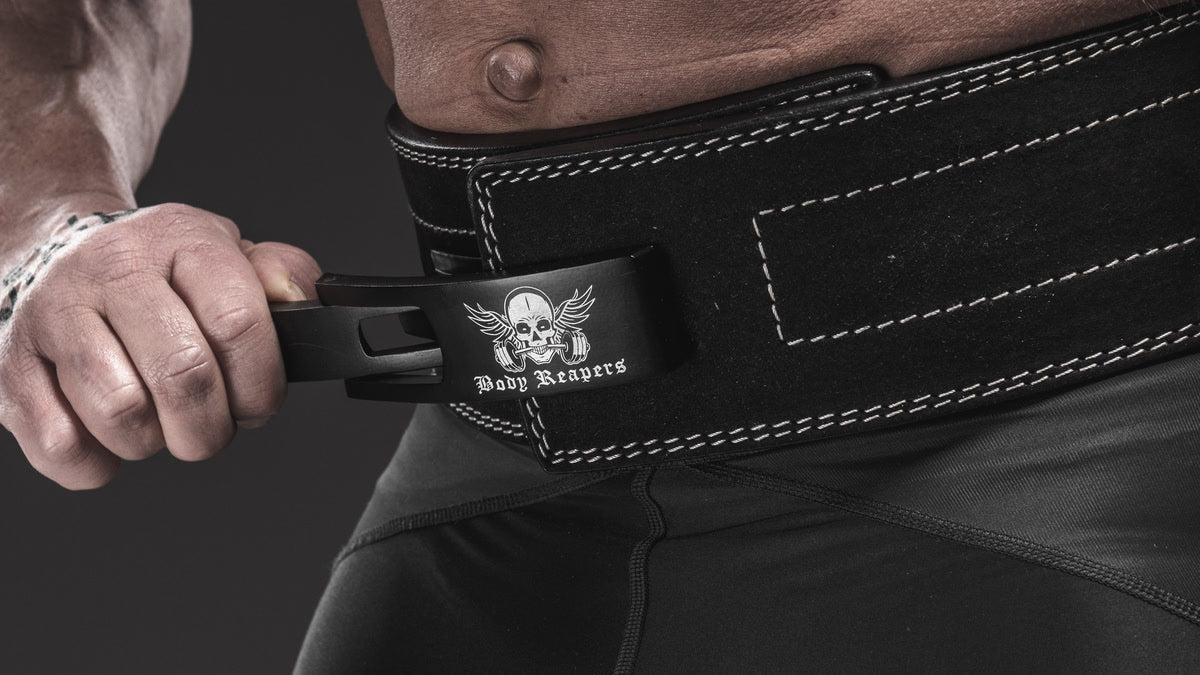
The 10MM Weight Lifting Lever Belt is built with a single-width 4-inch panel that holds the same pressure across the entire lumbar region rather than concentrating it at one point, and its lever buckle locks to identical tension every time it closes. For a lift where the torso angle barely changes but the hip angle changes constantly, that consistency is the practical reason a lever mechanism tends to outperform a prong belt for heavy sumo work: the bracing cue stays identical set after set, even as the hips move through more rotation than a conventional pull ever asks of them. If you are not sure whether your current training weight justifies a belt at all, when to use a belt for deadlifts covers the load thresholds by experience level before you commit to one lift style or the other. For the broader question of whether a belt belongs in sumo deadlift training at all, Do Lifting Belts Actually Prevent Back Injury? covers that case in more detail.
Setting Up the Sumo Stance, Step by Step
Start by walking your feet out wider than your conventional stance until your shins are close to vertical when you reach down to the bar. Turn your toes out until your knees can track in the same direction your toes are pointing once you start pulling. Reach down and take your grip inside your knees, keeping your arms as vertical as the width allows. Drop into position by opening your hips out to the sides and bending your knees, keeping your hips close to the bar rather than letting them drift back the way they would in a squat-style setup.
Pull your shoulders back and down, fill your belly with air, and lock your lats by pulling the slack out of the bar before it leaves the floor. Drive your knees out against the floor as you stand, matching the direction your toes are already pointing, instead of letting them drift inward as the bar clears your knees. Finish by driving your hips through at the top rather than hyperextending the lower back to get there.
Grip, Straps, and When Hands Give Out First
A wide stance changes bar position relative to the hands less than it changes hip mechanics, but grip still fails on heavy sumo pulls the same way it does on conventional ones: the hands give out before the legs and hips do. Weight Lifting Straps 24" use a 5mm neoprene pad that cushions the wrist through heavy pulling sets, which matters on sumo work specifically because the more upright torso position means more of the pull's total tension transfers straight through the forearms rather than being shared with a forward-leaning back angle. If grip failure is cutting your pulling sets short before your hips and legs are actually fatigued, that is a straps problem, not a programming problem.
Common Sumo Deadlift Mistakes
The most common mistake is letting the knees cave inward as the bar passes the knees, which cancels out the hip external rotation the stance is built around and shifts stress toward the inside of the knee joint instead. The second is standing too wide for actual hip mobility, which forces the lower back to compensate for a hip angle the lifter cannot control, producing a rounded or overextended spine at lockout. The third mistake shows up at setup: squatting straight down into the bar instead of pushing the hips back first, which stands the lifter up too early and turns the first few inches of the pull into a leg press instead of a hip-driven deadlift.
A rounding or overextended low back at lockout is a cueing problem to fix before it compounds into something bigger. If knee position is the issue, slow the pull down and film it before adding weight. Sumo deadlift technique is a training skill built through repetition, not a medical treatment, and it is not a substitute for a professional evaluation. If you feel something sharp or radiating in the hip, groin, or low back during setup, stop the lift and get it checked out before trying again.
Who Should Actually Pull Sumo
Lifters with longer torsos relative to their legs typically find sumo lets them pull with a more upright spine than conventional stance allows them, which is the biomechanical reason so many taller or longer-limbed lifters gravitate toward it. Lifters with limited hip external rotation, from anatomy or from tight hip rotators, often find the opposite: sumo asks for a range of motion they do not have yet, and conventional pulling fits their joints better until that mobility improves. The decision usually comes down to personal anatomy and preference, not which style looks flashier. Training the posterior chain beyond the deadlift itself helps lock in some of these same positions. A lifter who practices both stances during an off-season block usually walks away with a clear preference, instead of guessing from a single working set. That trial period is worth building into a program before committing to one style for a full competition cycle.

Frequently Asked Questions
Is sumo deadlift technique easier than conventional deadlift?
Not inherently. Sumo deadlift technique shortens the distance the bar has to travel and allows a more upright torso, which some lifters experience as easier on the lower back. It also demands more hip external rotation than conventional pulling, so a lifter with tight hips can find sumo harder, not easier, even with the shorter pull distance.
Do I need a different belt for sumo deadlifts?
You do not need a different belt, but you do need one that holds consistent pressure through a stance where the torso stays mostly upright. A lever belt with a single-width panel keeps the same bracing pressure across the whole lumbar region regardless of hip position, which fits a lift where the hip angle changes more than the torso angle does.
Why do my hips feel tight after switching to a sumo stance?
Sumo deadlift technique drives significantly more hip external rotation than conventional pulling, concentrated early in the lift. If your hip rotators have not needed that range of motion before, the stance will expose it. That is a mobility gap to train, not a sign the stance is unsafe for you.
Should I use lifting straps for sumo deadlifts?
Straps help on sumo deadlifts the same way they help on conventional ones: by removing grip as the limiting factor when your hips and legs can still produce force. Because the upright torso position in sumo sends more of the pull's tension straight through the forearms, grip often fails earlier on sumo than on conventional pulls at the same working weight.

Recommended Gear


Leave a comment
This site is protected by hCaptcha and the hCaptcha Privacy Policy and Terms of Service apply.