Your grip is failing. Your back feels strong, but the barbell is slipping from your fingers on your final deadlift rep. This common frustration limits your progress. Should you use lifting straps? Or will they make your grip weak? Learn how to boost your major lifts without hurting your forearm development. Let's solve the grip bottleneck.
What Are Lifting Straps For? The "Specificity of Stress" Principle
Lifting straps are a simple accessory. They wrap around your wrist and the barbell. Their job is singular. They secure your grip.
Think of your training focus as "Specificity of Stress." Are you training your grip or your back today? For heavy back and leg days, the goal is to stress those large muscles. When your grip gives out first, it steals that stress. Straps solve this. They allow you to direct the workout's primary stress to your target muscles.
This is not cheating. It is efficient training. A study in the Journal of Strength and Conditioning Research noted that grip fatigue significantly limits performance in pulling exercises. Straps help you push past this limit.
Evaluate Your Grip Strength: Diagnose Your Weakness
Before using straps, diagnose the problem. Not all grip failure is the same. Identify your type.
Crush Grip Failure. The bar physically rolls out of your closed fingers. This is common with double overhand deadlifts.
Fatigue Failure. A deep burn floods your forearms. Holding any weight becomes impossible, even if your back is fresh.
Form Failure. The slipping bar causes your back to round or your shoulders to hunch. This is dangerous. It increases injury risk.
If you experience crush or fatigue failure on your heaviest sets, straps are a smart tool. If you experience form failure, you must lower the weight immediately. Straps are not a fix for poor technique under load.
Weight Guidelines: The "Working Set Rule"
Many ask, "At what weight should I start?" A common suggestion is 70-80% of your one-rep max. But this is flawed. A 300-pound lifter and a 500-pound lifter have different needs.
Use the Working Set Rule
A better method is the "Working Set Rule." Use this principle instead of relying on a fixed percentage.
When to Use Lifting Straps
Use lifting straps when your grip consistently fails on the final one or two reps of your primary working sets. These are the sets where you push your muscles for growth or strength. This approach ensures your tools are applied with precision.
Straps for Strength Training
For low-rep strength training, consider straps only on your heaviest top sets where your grip gives out before your legs or back. Perform all warm-up sets and lighter technique work without straps to build a strong grip foundation.
Straps for Hypertrophy Training
For hypertrophy training with high reps, straps are valuable on your high volume back off sets to fully fatigue the target muscles like your lats or glutes. However, you should perform your first few working sets raw to build valuable grip endurance that supports your overall training.
When You Should Use Lifting Straps: Strategic Applications

Use straps for specific exercises and goals. Avoid using them in every workout.
First, use them for maximal overload on pulls. Use them on your heaviest sets of barbell rows, T-bar rows, or rack pulls. This lets you target your back and traps as much as possible without your hands quitting first.
Second, use them for high-volume hypertrophy work. On exercises like Romanian deadlifts or lat pulldowns, cumulative grip fatigue can ruin your pump. Straps let you accumulate volume for muscle growth.
Third, use them for Olympic lift technique practice. Weightlifters use straps for clean and snatch pulls. This allows high-volume technique practice without shredding their hands.
Fourth, use them for working around injuries. If you have a healed wrist or finger injury, straps can reduce strain. Always consult a doctor or physiotherapist first. Do not use straps to train through acute pain.
Explore More: Are Straps Allowed in Powerlifting? Rules, Exceptions & Smart Training Advice
How to Use Lifting Straps Properly: A Secure Method
Using straps incorrectly is unsafe. Follow these steps to secure a hold.
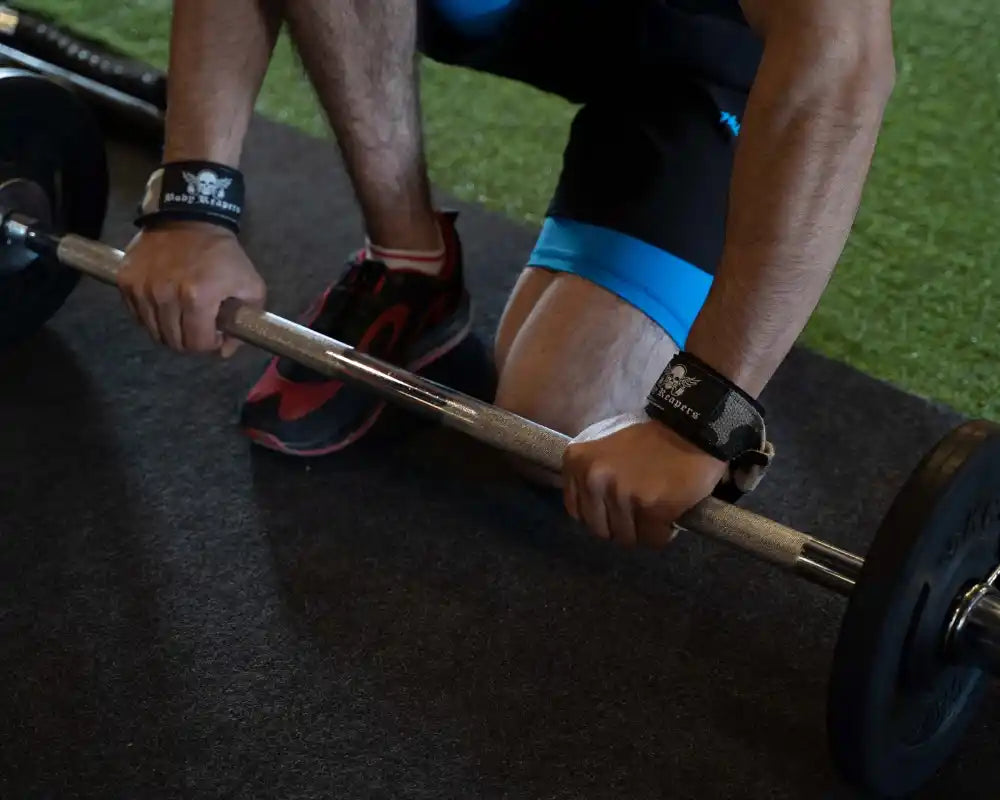
Step 1 is to grip the bar first. Always take a firm, full grip on the barbell or dumbbell handle first. The strap supplements your grip. It does not replace it.
Step 2 is to thread and wrap. Put your hand through the strap's loop. Wrap the loose end around the bar in the direction of your thumb. For a lasso strap, you will create a loop that tightens as you pull.
Step 3 is to tighten and pull. Rotate your wrist to take up the slack. Pull the strap snug. The connection should feel tight and secure against your wrist.
Step 4 is to release safely. After your set, relax your grip and rotate your wrist the opposite way. The strap should loosen instantly. Do not fumble with tangled straps while holding a weight.
Conclusion: Straps Are a Tool, Not a Crutch
Lifting straps are just a tool and don't make or break your progress. Using them wisely is what sets a thoughtful lifter apart from someone who hits a plateau.
Pay attention to your grip during heavy sets and combine strap use with specific grip training. This way, you can lift heavier while still strengthening your forearms.
Don't let your grip limit your lifts. Use the right approach and tools to take full control of your training.
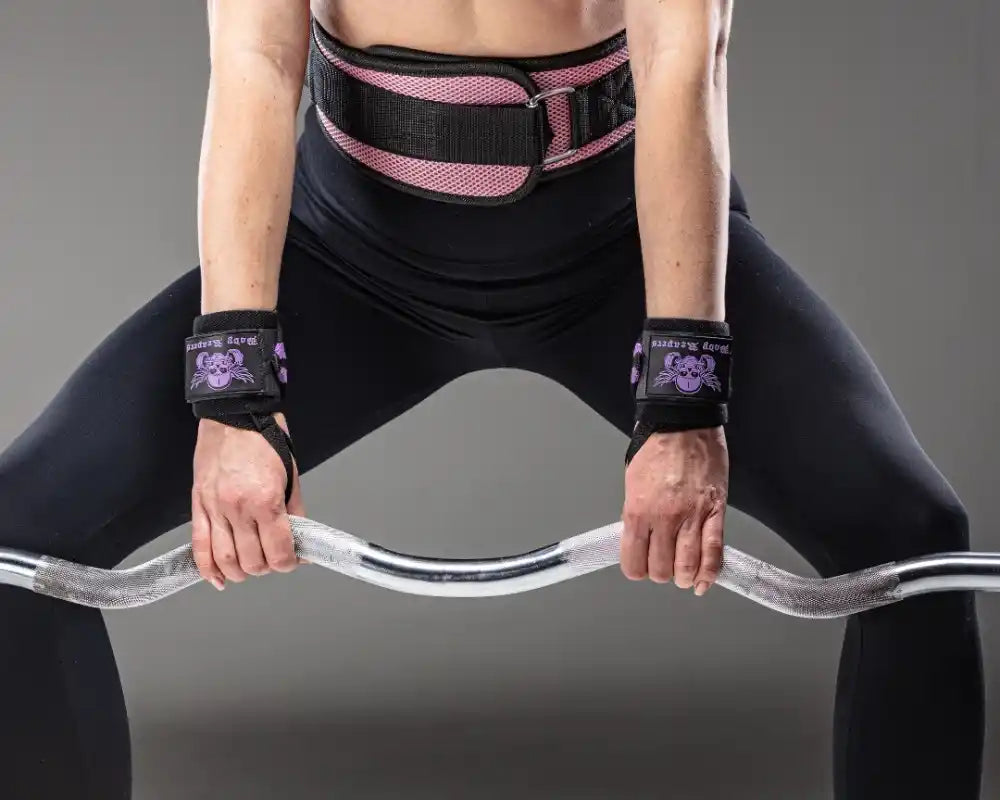
Body Reapers Weight Lifting Straps provide the secure, reliable hold you need. They are built with military-grade nylon for maximum durability. Train your back, not just your grip. Equip your next personal record.
Frequently Asked Questions
Do lifting straps weaken your grip strength?
Not if used strategically. Relying on straps for every single set will neglect your grip. However, using them only for your heaviest or highest volume pulling sets allows you to train your back harder. You then train your grip directly on other days with exercises like farmer's walks. This balanced approach can lead to a stronger overall grip.
Are lifting straps allowed in powerlifting meets?
No. In most sanctioned powerlifting federations, such as the IPF or USAPL, lifting straps are not allowed during the competition deadlift. You may use them in training, but you must practice your competition pulls without them. Chalk is your only legal grip aid on the platform.
Which type of lifting strap is best for beginners?
Closed-loop straps or basic lasso straps are best for beginners. They are simple to use and very secure. Figure 8 straps are more secure but can be harder to adjust and release quickly. Start with a simple, durable pair like basic lasso straps to learn the technique.
Can I use lifting straps for pull-ups?
Yes, lifting straps for pull-ups are very effective. They allow you to focus on engaging your lats and back muscles without your grip failing first. This is especially useful for high-rep sets or weighted pull-ups. They help you achieve a better mind-muscle connection for back development.
Recommended Gear


Leave a comment
This site is protected by hCaptcha and the hCaptcha Privacy Policy and Terms of Service apply.