You see them in every gym. You might own one. But are you getting the full support your weight lifting belt is meant to provide? A belt is not a magic shield for your back. It is a performance tool. Used correctly, it makes you safer and stronger. Used poorly, it is just a piece of leather or nylon. This guide will show you how to get maximum support from your lifting belt. We will move beyond the basics. You will learn the science of bracing. You will master the timing. You will choose the right tool for your goals. Let us build your knowledge from the ground up.
How a Lifting Belt Actually Works: It is Not a Crutch
Many lifters think a belt directly supports their spine. This is not quite right. Instead, a lifting belt gives your muscles something to press against.
When you take a deep breath and brace your core, you create increased pressure within your abdomen. Think of your torso as a sealed cylinder. A good lifting belt makes this cylinder more robust. It provides a physical feedback loop. Your muscles push out against the belt. The belt pushes back. This creates a stable column from your shoulders to your hips.
A study in the Journal of Strength and Conditioning Research examined belt use during heavy lifts. It found that belts significantly increase intra-abdominal pressure. This leads to greater trunk stiffness. This is the true benefit of weight lifting belts. They enhance your body's natural stabilization system. They do not replace it.
When Should You Use a Weight Lifting Belt?
This is a key question for lifters, especially beginners. The answer defines maximum support. Your belt is for your heaviest, most taxing sets. It is not for every exercise.
Use your belt for:
- Your top working sets are on squats and deadlifts.
- Heavy overhead presses.
- Any maximal or near-maximal effort lift where spinal stability is critical.
Do not use your belt for:
- Warm-up sets.
- Accessory exercises like curls or leg extensions.
- As a substitute for learning proper bracing technique.
If you are a beginner, focus on technique first. A lifting belt for beginners can be helpful. But use it as a learning tool. Feel how it aids your brace. Do not become reliant on it for light weights. The goal is to build your natural core strength. The belt then multiplies that strength when you need it most.
The Step-by-Step Guide to Using a Belt Correctly
Knowing when to wear it is half the battle. Knowing how to wear it is the other half. Follow these steps for true support.
Step 1: Proper Placement and Fit
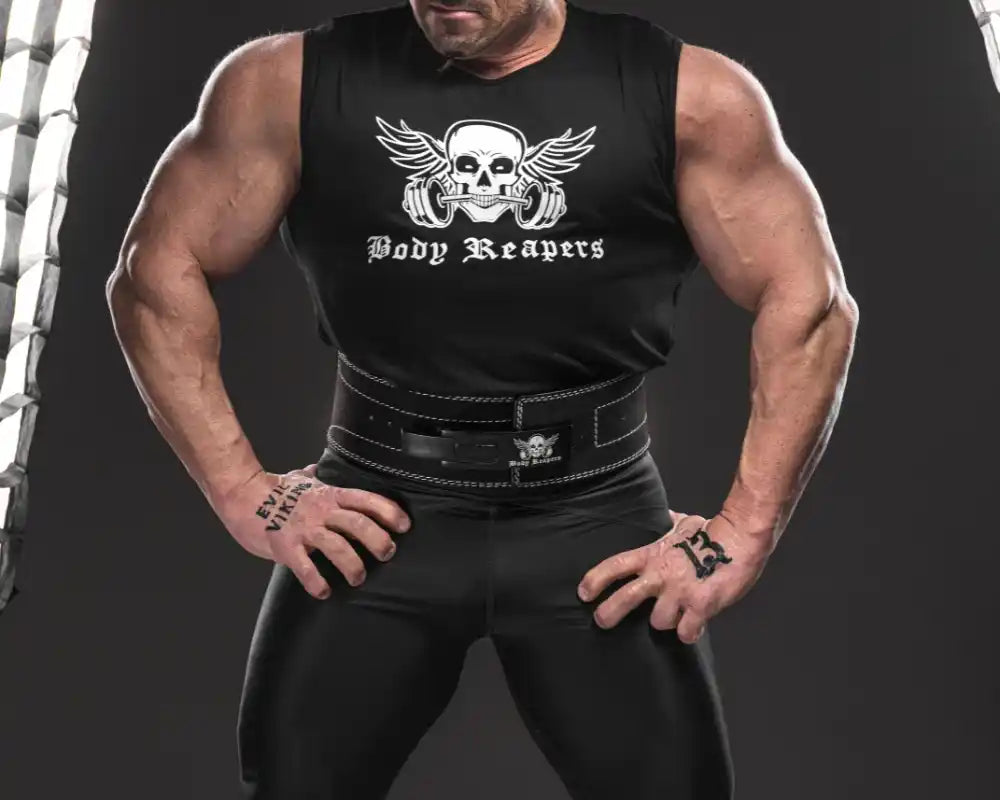
Place your weight lifting belt around your torso. Position it so it covers your navel and rests over your lower back. It should sit on your abdominal muscles and obliques, not on your ribs or hips.
How tight should it be? It should be snug, not restrictive. You should be able to take a deep breath into your belly against the belt. A common test is the finger test. You should be able to slide one finger between the belt and your stomach with effort. This is why consulting a weight lifting belt sizing guide is crucial before you buy.
Also Read: What Size Weightifting Belt Should I Get?
Step 2: The Breath and Brace Sequence (This is Everything)
- Set your stance and grip on the bar.
- Take a deep breath into your belly, not your chest. Imagine filling your entire core with air.
- Brace your abs as if you are about to be punched in the stomach. Push your entire midsection out against the belt 360 degrees.
- Initiate your lift while holding this braced, pressurized position.
-
Exhale only after you complete the hardest part of the lift, or at the top.
This sequence shows how to use a weightlifting belt for maximum effect. The belt gives your brace a physical boundary. This makes you more stable.
Choosing Your Belt: A Guide to the Best Fit for You
Not all belts are the same. The best weight lifting belt for you depends on your sport and preference. Let us break down the main types.
Lever Belt vs Prong Belt
This is the biggest choice. A lever belt uses a metal lever for closure. It offers consistent, maximum tightness with a simple flip. It is very secure but harder to adjust quickly between lifts. A prong belt uses a traditional tongue-and-prong system, like a belt for your pants. It is easier to adjust, but it can be harder to get as tight. For most lifters seeking maximum support, a lever system is often preferred.
Leather vs Nylon Lifting Belt
Leather belts are the classic choice for powerlifting. They are rigid, durable, and form to your body over time. They require a break-in period. Nylon lifting belts are more flexible. They are often favored in Olympic weightlifting and CrossFit, where the catch position is required. For pure stability in squats and deadlifts, leather is typically the gold standard.
Other Features to Consider
- Width and Taper: A uniform belt offers the same support all around. A tapered belt is narrower in the front. This can allow for more flexion in movements like the deadlift.
- Thickness: Most belts are 10mm or 13mm thick. A 13mm lifting belt is stiffer and offers more support. A 10mm belt may be more comfortable for some, especially when starting. Our Body Reapers belts are engineered at an optimal thickness. We balance supreme support with the ability to move properly.
Belt Use for Your Key Lifts: Squats and Deadlifts
Applying this knowledge to your main lifts is where it counts.
Using a Weight Belt for Squats
During a squat, your torso must stay upright as you descend. A belt helps maintain this position. It prevents your lower back from rounding under the bar. When you drive out of the bottom, the stability from your braced core transfers power directly to the bar. This is how a belt helps you lift more. It makes you more efficient.
Using a Weight Belt for Deadlift
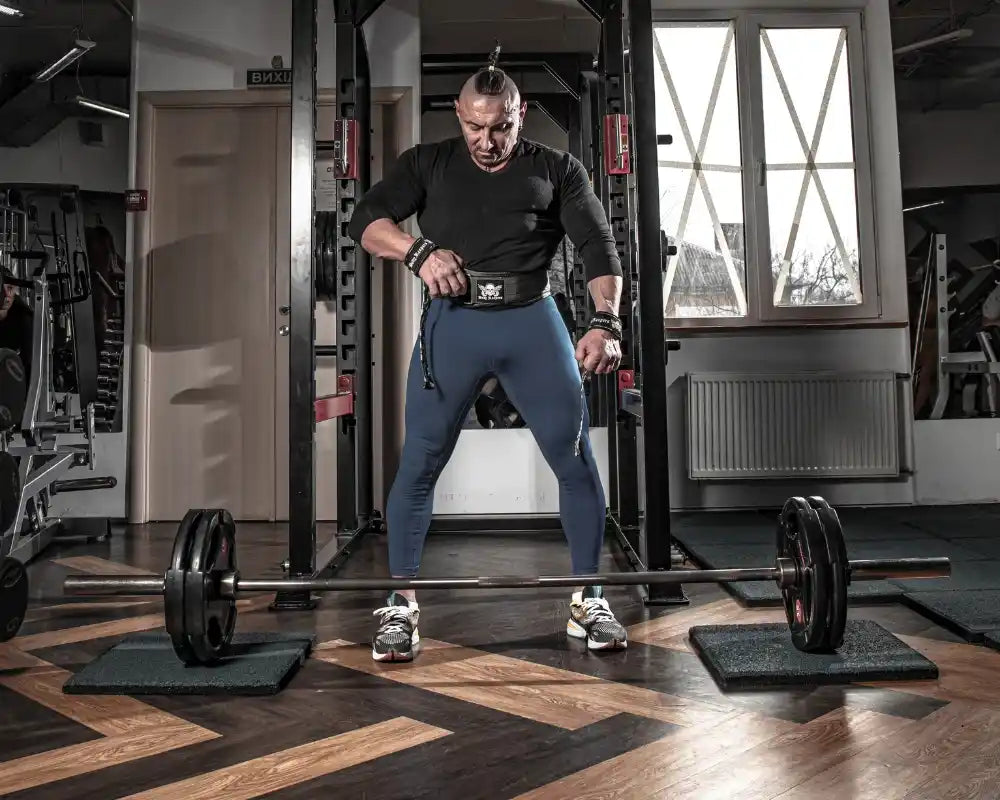
The deadlift starts from the floor. Your back is in a vulnerable horizontal position. A belt is crucial here. It helps you maintain a neutral spine while pulling. The key is to set your brace before you grip the bar. Do not put the belt on so tight that you cannot get into your starting position. This is where a slightly looser fit or a tapered design can be beneficial.
Frequently Asked Questions
Q: Will using a weight lifting belt weaken my core?
A: No, not when used correctly. Thoughts may actually increase abdominal muscle activity during lifts. They train you to brace properly. Using a belt only on heavy sets lets your core work without it on lighter days.
Q: Can a lifting belt help with squats if I have lower back pain?
A: This requires caution. A belt can help a healthy lifter avoid pain by promoting better form. If you have existing back pain, you must see a doctor or physical therapist. They can diagnose the cause. Using a belt to mask pain from an injury is dangerous.
Support Designed from the Ground Up
Getting maximum support is a skill. It combines the right equipment with precise technique. A belt is not a shortcut. It amplifies the strength and stability you build through consistent training.
When you choose a belt, you are choosing a training partner. It should be as dedicated to your safety as you are.
This philosophy is why we built the Body Reapers lifting belt differently. When you have rebuilt bodies, you design with orthopedic insight. Our belt is not just about intra-abdominal pressure. It is engineered to stabilize your entire kinetic chain. We consider how your hips, spine, and shoulders work together under load.
Every stitch and contour has a purpose: to protect your spine and enhance your performance. We bridge the gap between clinical knowledge and gym-floor reality.
Explore Body Reapers belts if you want performance plus protection.
Train strong. Train smart.
Recommended Gear


Leave a comment
This site is protected by hCaptcha and the hCaptcha Privacy Policy and Terms of Service apply.