Most lifters tighten their belt by instinct. Some crank it down until their ribs hurt. Others leave it too loose and lose any real support. Both weaken your brace. Both put your spine at risk. The right pressure lives between those extremes. The aim is control, not crushing force.
A lifting belt lets you push pressure into your core so your spine stays stable. It does not replace good technique. It makes it more obvious. Research on spinal loading shows that higher intra-abdominal pressure lowers shear stress on the lumbar spine. When the belt fits correctly, you feel supported without struggling to breathe or move.
Below is the fit guide I give athletes in strength training, Olympic lifting and powerlifting.
What a Belt Does for Your Body

A lifting belt increases resistance around your midsection. When you breathe in and brace, your core pushes into the belt. This rise in intra-abdominal pressure builds a solid foundation for any heavy lift.
This is the mechanism behind stronger squats and deadlifts.
If you cannot take a full breath with the belt on, the belt is too tight.
If the belt shifts on your torso, it is too loose.
Your body tells you the truth long before the weight does.
Related: What Size Weightifting Belt Should I Get?
How Tight Should a Belt Be? Exact Fit Rule
Use the two-finger rule.
You should be able to slide two fingers between your belt and your torso before you brace. Once you inhale and push your core into the belt, the gap should disappear.
This creates a stable wall for your brace without choking your breath.
How tight should a belt be depends on your lift, your location on the torso and your breathing strength. A belt should feel snug against your core while still allowing a deep breath before bracing.
Signs Your Belt Is Too Tight
A belt that limits your breathing weakens your brace.
A belt that cuts into your ribs reduces stability.
Common signs include:
- Sharp pressure under the ribs
- Shallow breathing
- The belt riding up during squats
- The belt digging into the hips on deadlifts
- The core collapsing instead of expanding
If your belt causes stomach pain, it’s likely tightened beyond safe control.
Signs Your Belt Is Too Loose
A loose belt shifts during the descent of a squat or when you hinge in a deadlift.
You cannot build tension because your core pushes out into space instead of resistance.
Signs:
- Belt moves when you brace
- Belt rises or rotates
- No pressure during the lift
- No boost in stability
- Cannot feel the belt at the bottom of your squat
A belt should never wiggle once tension rises.
Tightness for Squats vs. Deadlifts
Squats:
Most lifters need the belt one notch tighter for squats because the torso stays more upright. You should be able to take a full breath, expand your belly, and feel even pressure around the belt.
Deadlifts:
Many lifters need the belt slightly looser since the torso leans forward. If it’s too tight, it can pinch the hips and block a solid brace.
Test one-hole adjustments until your brace feels steady and repeatable.
Tightness for Beginners
Beginners often pull the belt too tight because they think tight equals strong.
The real power comes from core expansion, not belt compression.
Guide beginners to focus on:
- A full belly breath
- A controlled brace
- Even pressure around the midsection
- A smooth descent
- A stable spine
Leather vs. Nylon Belts
Leather belts are rigid and provide the tightest, most supportive feel. They break in over time but maintain firmness .
Nylon belts offer more flexibility and a less restrictive fit. They prioritize comfort and range of motion over maximum support .
Read More: Leather vs Nylon Lifting Belts: Which One Is Right for You?
Closure Systems Matter
Lever belts provide the most secure, consistent fastening but lack quick adjustability . You need a screwdriver to change settings, making them ideal for lifters who maintain consistent tightness.
Prong belts offer security with easier adjustment between lifts or days . Choose these if you prefer fluctuating tightness.
Velcro belts provide the least secure fit but maximum adjustment flexibility . They naturally work best with slightly looser settings.
Common Belt Tightness Mistakes

These errors slow progress and increase injury risk:Wrong Placement
- On the ribs – Limits breathing and makes it hard to create pressure.
- Below the hips – Rests on bone instead of muscle, offering little support.
Incorrect Tightness
- Tightening before the breath – Leaves no room to brace. Inhale first, then secure the belt.
- Cranking it too tight – Collapses your posture instead of letting your core expand.
- Too loose on heavy reps – Won’t give your abs anything solid to push against.
Bad Timing
- Wearing it for warm-ups – Can make your core lazy. Save it for your working sets.
- Using it for every set – Robs you of building natural stability. Only use it when the weight gets challenging.
Correcting these issues can improve your bracing mechanics in a single session.
Related: 5 Types of Lifting Belts: What You Need to Know Before Buying
How to Put on a Belt Correctly
Follow this sequence:
- Position it low. Place the belt so it sits right above your hip bones, not up on your ribs.
- Snug, not strangled. Buckle it tight enough that you can just barely fit two flat fingers between the belt and your stomach.
- Breathe into your belly. Take a deep breath and push it down to expand your stomach, not your chest.
- Brace outward. Flex your entire core out against the belt. You should feel pressure evenly around your whole torso—front, sides, and back.
- Lift tight. Hold that braced pressure as you execute the lift. The belt is a wall for your abs to push against.
Do You Need a Belt for Every Lift?
No. Use the belt for lifts where spinal load increases.
Ideal movements:
- Back squat
- Front squat
- Deadlift
- Romanian deadlift
- Heavy rows
- Heavy overhead work
Do not use the belt for warm-ups, pull-ups, curls or any movement that uses minimal torso stress.
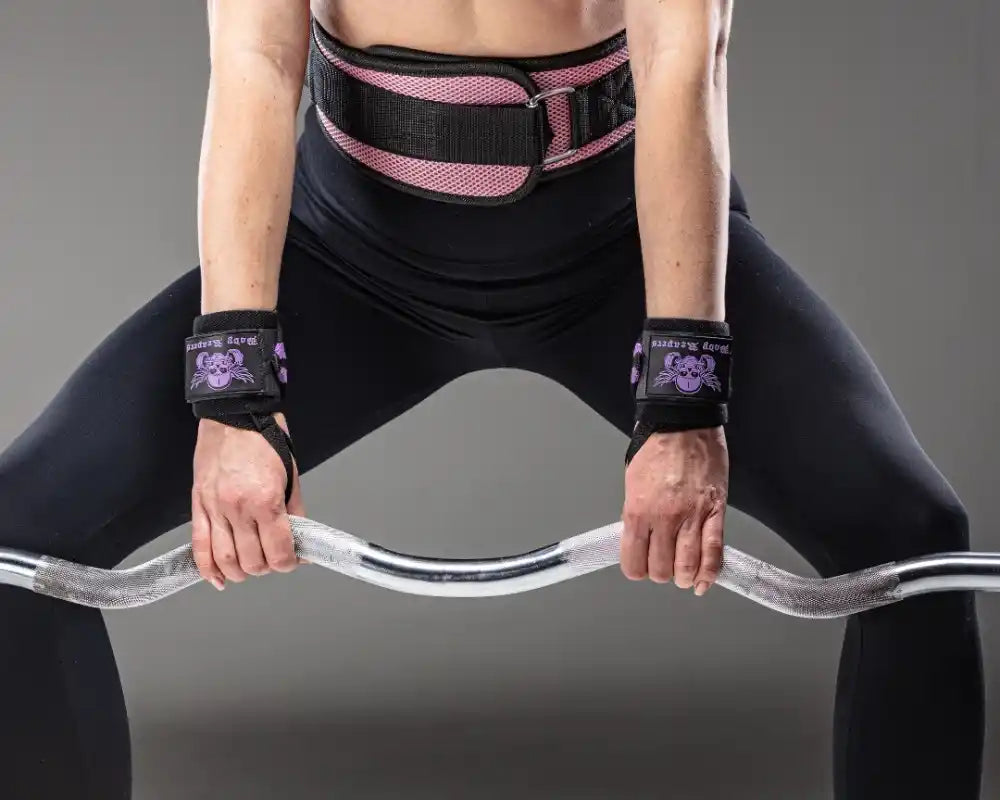
Body Reapers belts follow your movement, support your spine and hold pressure without pain.
Your spine deserves precise support.
Your lifts deserve reliable strength.
Recommended Gear



Leave a comment
This site is protected by hCaptcha and the hCaptcha Privacy Policy and Terms of Service apply.