Trap Bar Deadlift vs. Regular Deadlift: Which is Best?
This question splits gyms. Lifters debate it constantly. Which bar builds more power? Which protects the spine? The answer is not simple. One is not universally best. The best choice depends on the individual's body and goals. A strength coach can break down the mechanics. The research is understood. It is possible to learn which bar serves a lifter's needs.
Understanding the Two Lifts
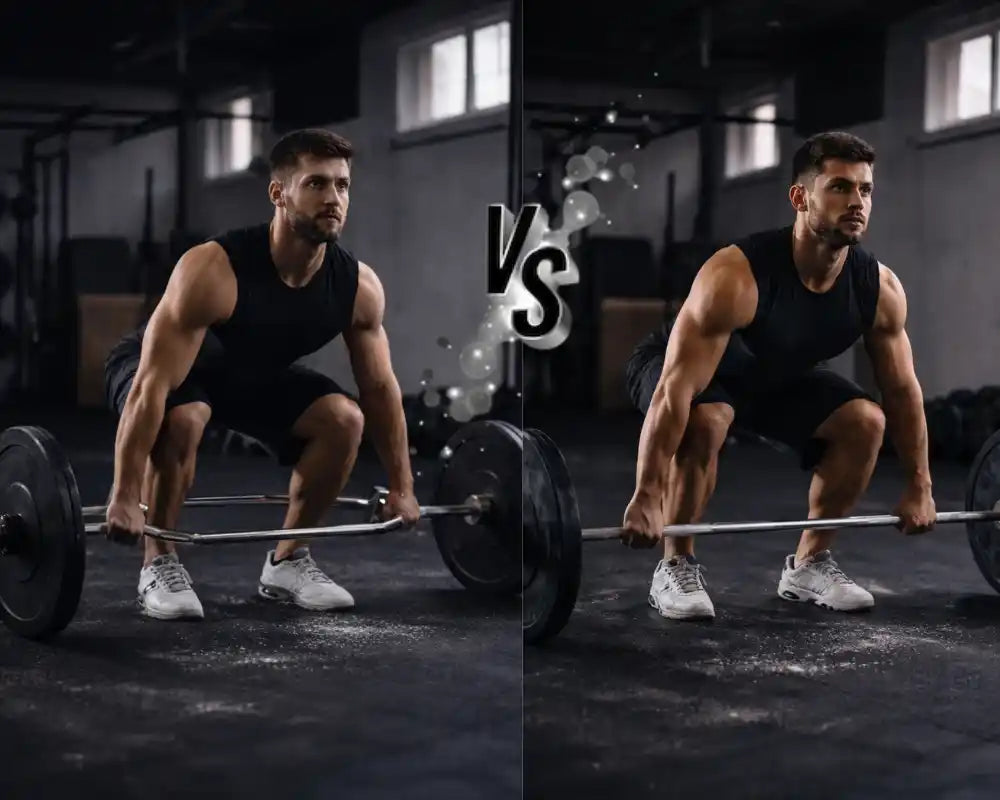
A conventional deadlift uses a straight barbell. The lifter stands behind it, hinging at the hips. The torso leans forward as the bar is pulled up the legs. This is a posterior chain champion.
A trap bar deadlift uses a hexagonal bar. The lifter stands inside it, with the grip at the sides. The torso stays more upright, and the movement involves pushing the floor away. This is a powerful hybrid movement.
The differences between the trap bar and the deadlift start with setup. They change everything about the pull.
Related: When to use a belt for deadlifts?
Biomechanics and Muscle Activation
Science shows how each lift works. A study in the Journal of Strength and Conditioning Research compared them. Researchers measured muscle activity.
The conventional deadlift targets the back chain. It fires the erector spinae intensely. It heavily recruits the hamstrings and glutes. The lift builds tremendous back strength.
The trap bar shifts focus. The more upright posture reduces spinal load. It increases quadriceps activation. The glutes still work hard. The upper back gets more involved. Often, more weight can be lifted with the trap bar.
The Safety and Joint Stress Discussion
Many ask, is the trap bar deadlift safer? The evidence suggests yes for the lower back.
The same journal study recorded spinal forces. The conventional deadlift creates higher shear forces on the lumbar spine. The trap bar reduces stress. The centred load is key.
This makes the trap bar a smart choice for back health. It is excellent for lifters managing past injuries. It is also why the trap bar is often recommended for beginners. It teaches the hinge pattern with less technical demand.
Do not mistake this. The conventional deadlift is safe when performed with proper form. But the trap bar has a larger margin for error.
Also Read: How to Sumo Deadlift With Perfect Form
Choosing Based on Goals
So, which is better? Let goals decide.
Choose the Conventional Deadlift If:
- Competing in powerlifting.
- The goal is maximal posterior chain strength.
- Mobility to pull from the floor safely exists.
-
Legendary back and grip strength is desired.
Choose the Trap Bar Deadlift If:
- The primary goal is athletic performance and power.
- Heavy loads need to be moved with minimal risk to the lower back.
- A beginner is learning the hinge.
- The lifter has long limbs.
- Quad development, along with the hips and glutes, is sought.
For pure strength athletes, the conventional bar is non-negotiable. For athletes and general trainees, the benefits of the trap bar often outweigh those of the traditional pull.
Can Both Be Used?
Absolutely. Picking one forever is not necessary. Many smart programs use both. Use the conventional deadlift as a strength benchmark. Use the trap bar for heavier volume work or athletic training. This answers whether the trap bar can replace the traditional. It can be used for general fitness. It cannot be for sport specificity.
How to Program Each Lift
Programming must be thoughtfully considered.
For strength in the conventional, use lower reps. Think sets of 1 to 5. Prioritize rest and perfect form.
For the trap bar, higher loads can be used. It can also be used for higher rep ranges. It excels in hypertrophy blocks. Use it for sets of 6-10. It builds muscle with less systemic fatigue.
Frequently Asked Questions
Is the trap bar deadlift easier than conventional?
It is often easier to learn. The technique is simpler. Most people can lift more weight immediately. This does not make it inferior. It makes it a highly efficient tool.
What are the main trap bar deadlift benefits?
The top benefits are reduced lower back stress, greater quad involvement, and the ability to handle heavier loads safely. It is also superb for developing explosive jumping power.
Which is better for overall muscle?
For balanced muscle growth, the trap bar has an edge. It works the quads and upper back more while still hitting the glutes hard. The conventional deadlift is more specialized for the posterior chain.
Is conventional deadlift form harder to learn?
Yes. It requires more mobility. It demands precise back alignment. The trap bar has a more natural starting position. This is why coaches often start beginners with the trap bar to master the hip hinge before introducing the straight bar.
Final Recommendation
Stop looking for the best lift. Look for the best lift for the individual. Assess anatomy. Respect injury history. Target specific goals.
If the goal is to be a powerlifter, master the conventional deadlift. If the goal is to be a powerful, resilient athlete, make the trap bar a cornerstone of your training. If the goal is to build a strong, durable body for life, cycle through training.
Whether it's a traditional deadlift or any other variation, make sure you practice safely and train with stability. The Body Reapers Weightlifting Belt offers natural and reliable support that enhances core bracing and stability, whether used with a heavy trap bar or conventional pulls. Train smarter, lift stronger.
Recommended Gear


Leave a comment
This site is protected by hCaptcha and the hCaptcha Privacy Policy and Terms of Service apply.