The Role of a Lifting Belt in Protecting Your Spine
When you squat, deadlift or press heavy weights, your spine takes the load. You ask: Does a lifting belt help your back?
The answer is not a simple yes. A belt is a powerful tool for spinal safety. But it works in a specific way. Used correctly, it protects your spine. Used incorrectly, it can create problems.
How a Lifting Belt Actually Works: It's Not Armor
A belt does not act as a rigid brace for your spine. It does not directly support your back.

Instead, a lifting belt gives your core muscles something to push against. When you take a breath and brace your abdomen, you increase intra-abdominal pressure (IAP). Think of your torso as a sealed soda can. A whole can is hard to crush. An empty one collapses easily.
The belt helps you create that "full can" pressure. This pressurized cylinder stabilizes your entire spine from the inside out. Research in the Journal of Strength and Conditioning Research links this increased IAP to greater spinal stiffness and reduced shear forces on the vertebrae.
The 5 Real Ways a Belt Protects Your Back
1. Builds Pressure Inside Your Core
A weightlifting belt works by giving your core muscles a surface to push against. This builds up internal pressure, stabilizing your spine like a supportive pillar. The result is a significant reduction in stress placed on your lower back.
2. Keeps Your Spine in Line
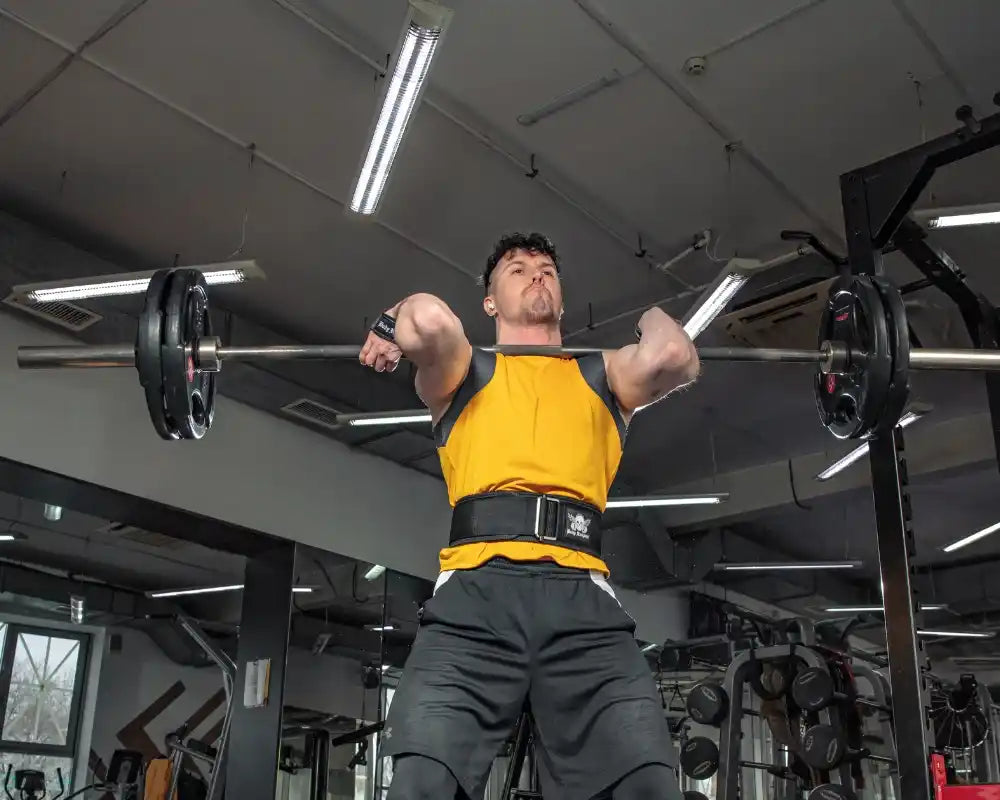
The belt reminds you to hold proper posture. When you squat or deadlift, it helps prevent your lower back from rounding or arching. Staying in this neutral position lowers the risk of strain or injury.
3. Gives You Stronger Bracing Feedback
When you push your abs against the belt, you feel instant feedback. This teaches you how to brace correctly. With practice, your body learns how to create that same tension even without the belt.
4. Reduces Spinal Compression Stress
Research shows belts help reduce the pressure and minor "shrinkage" that happens in the spine after heavy lifting. Less compression means your discs and muscles take less impact under big loads.
5. Boosts Confidence and Control Under Load
Wearing a belt can improve mental focus. Knowing your core is supported lets you lift heavier with more control. That confidence often leads to smoother, safer movements and stronger performance.
Recommended: Reasons for Lower Back Pain When Squatting
The Best Lower Back Exercises to Power Up Your Back
The Critical Mistake: How Belts Can Cause Harm
A belt is a tool, not a solution. It manages load but does not fix errors.
A belt will hurt your back if you use it to compensate for poor form. Lifting with a rounded back is dangerous, belt or no belt. The belt might even increase injury risk by giving false confidence.
Overuse can weaken your core. Relying on a belt for every single exercise, even light weights, can detrain your natural stabilizers. Your core muscles need to work independently to stay strong.
A lifting belt helps your back by supercharging your internal bracing system. It is not a magic shield against bad technique.
Your first line of defense is always a strong core and proper form. A belt is your second line of defense when loads get heavy.
FAQ's
Q. Does wearing a lifting belt prevent lower back pain during heavy squats?
A: It can help by improving stability and reducing spinal load. However, it cannot compensate for poor form or a weak core.
2. I'm a beginner. Should I start with a belt?
A: It's best to first focus on mastering your form and learning how to brace your core without a belt.The belt enhances an already proficient system; it does not build one.
3. Are some belts better for back support?
A: Yes. A belt must be rigid to be effective. Soft, velcro belts often fail under heavy loads. A full-grain leather belt, like the Body Reapers belt, provides the consistent, solid feedback your core needs to create proper stability.
4. Do powerlifters always wear belts?
A: No. They use them strategically for maximum attempts and heavy reps. They perform most of their volume work without a belt to maintain core strength and technical proficiency.
Invest in your safety. Invest in equipment that performs when the weight gets challenging. The Body Reapers Lifting Belt gives you the reliable support you need to push your limits without fear.
Recommended Gear


Leave a comment
This site is protected by hCaptcha and the hCaptcha Privacy Policy and Terms of Service apply.