You show up every week and grind through the main lifts. The weights feel heavy, but progress slows. Your shoulders ache, and your knees feel cranky. Something is not right.
This is where accessory exercises change the game. These smaller movements support your big lifts by fixing weak spots, building muscle your main lifts miss, and keeping your joints healthy.
Most people ignore accessory work. They think bench, squat, and deadlift are all that matter. This mistake leads to muscle imbalances, higher injury risk, and poor posture. The stabilizers stay weak, and the back of your shoulders never catches up.
This guide covers the best accessory exercises for strength training. You will learn what works, why it matters, and how to build a routine that delivers results.
Let us fix those weak points for good.
What Are Accessory Exercises?
Accessory exercises are movements that support your main compound lifts. They target specific muscles instead of multiple large muscle groups at once.
Think of it like building a house. Your main lifts are the frame. They provide the structure. Accessory exercises are everything else. They are the wiring, the plumbing, the finishing work. They make everything strong and functional.
Also Read: 7 Best Bench Press Accessory Exercises to Boost Your Strength
Why Accessory Work Matters for Strength and Safety
Strength accessory exercises serve several purposes. Each one matters for long-term progress.
1. Build Strength in Weak Areas
Every lifter has weak points. Maybe your legs give out before your back on deadlifts. Your triceps may fail before your chest on the bench press. Accessory exercises target these exact spots.
Fix the weak link, and the whole chain gets stronger.
2. Prevent Injury
Injuries happen when muscles pull unevenly. One side works harder. One muscle overpowers another. Joints take the beating.
Accessory exercises correct these imbalances. They strengthen small stabilizer muscles that main lifts ignore. They build toughness in tendons and connective tissue. They keep you lifting for years, not just months.
Your rotator cuff is a perfect example. Bench press does not strengthen it directly. Face pulls and external rotation work do. Skip these and shoulder pain eventually shows up.
3. Build More Muscle
Best accessory exercises for muscle growth hit muscles that compound lifts only touch lightly. Your side delts, rear delts, biceps, and calves all need direct work to grow fully.
Higher rep ranges common in accessory training also create a different kind of muscle stress. This pumps blood into muscles and drives growth.
Related: 5 Best Cable Chest Exercises for Muscle Growth
4. Improve Main Lift Technique
Accessory exercises after compound lifts reinforce proper movement patterns. Single-leg work improves squat stability. Rowing exercises teach a better deadlift setup. Core work supports everything.
Better technique means heavier weights. Heavier weights mean more strength and size.
Best Upper Body Accessory Exercises Gym Routine
This upper body accessory exercises gym routine hits every muscle your main presses miss. Do these after your main bench or overhead press work.
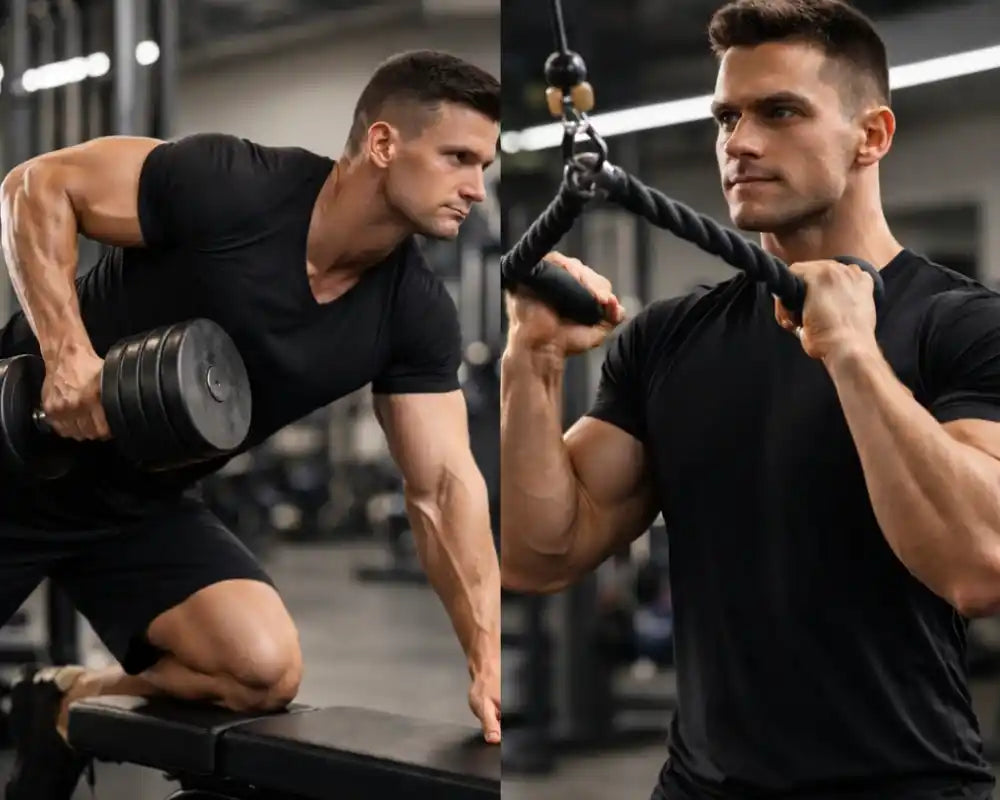
1. Dumbbell Row
Why it works: Most lifters have weak backs. Pushing muscles overpower pulling muscles. This leads to rounded shoulders and poor posture. Dumbbell rows build back thickness and balance, pushing strength.
How to do it: Place one knee and hand out on a bench. Keep your back flat. Pull the dumbbell to your hip. Squeeze at the top. Lower with control.
Hit 3 or 4 sets, aiming for 8 to 12 reps on each side.
2. Face Pulls
Why it works: Face pulls strengthen rear delts and external rotators. They fix rounded shoulders and protect the rotator cuff. This single exercise prevents more shoulder injuries than almost anything else.
How to do it: Set a cable station at upper chest height and secure a rope to the station. Hold onto the rope with both hands. Pull it toward your forehead. Keep your upper arms level with the ground. Contract your rear shoulders at the top.
Perform 3 rounds of 15–20 repetitions
Your wrists ache after heavy pulls. That is unnecessary stress your joints should not have to bear. Fix it with Body Reapers orthopedic wrist wraps. We follow biomechanics principles to keep your wrists stable and healthy.
3. Tricep Pushdowns
Why it works: Your tricep makes up two-thirds of your arm mass. Strong triceps drive the bench press lockout. Weak triceps mean stalled presses.
How to do it: Attach a straight or V-bar to a high cable. Grab the bar with palms down. Your elbows must be pinned to our sides. Press down until arms are extended. Squeeze. Control the weight back up.
Aim for 3 sets, keeping the rep count in the 10–15 range.
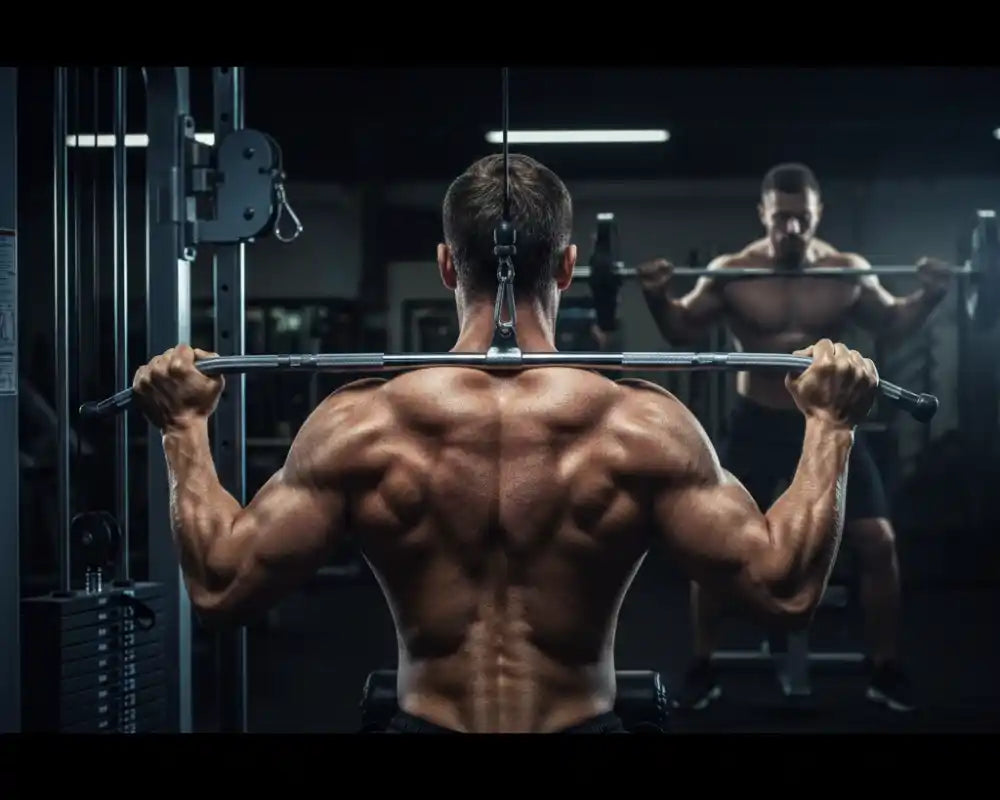
4. Lat Pulldowns
Why it works: Lat strength supports every pulling movement. It also stabilizes your shoulders during pressing. Wide lats create the V-shape every lifter wants.
How to do it: Take a wide hold on the bar. Take a small step back. Bring the bar up to your chest. Your lats should be squeezed at the bottom. Regain control of the weight.
Complete 3 sets, 10–12 reps per set
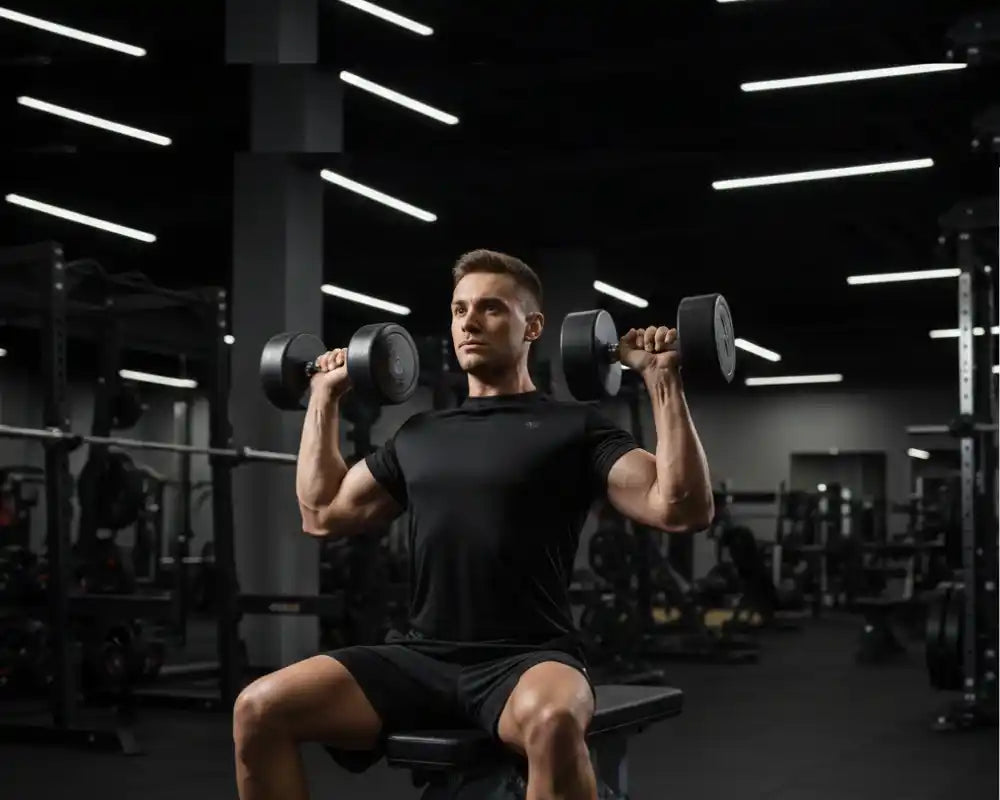
5. Dumbbell Lateral Raises
Why it works: Side delts create shoulder width. Compound presses hit them indirectly. Direct work builds them fully. This exercise makes your shoulders look wider.
How to do it: Hold light dumbbells at your sides. Lead with your elbows. Raise the weights to shoulder height. Stop there. Lower with control. Do not use momentum.
Do 3 sets, keeping reps in the 12–15 range
Frequently Asked Questions
Q: What are the best accessory exercises for strength training?
A: The best accessory exercises for strength training target your weak points. For bench press, use dumbbell rows and tricep work. For squat, use lunges and leg curls. For deadlift, use Romanian deadlifts and back extensions. Pick exercises that fix your specific sticking points.
Q: Can accessory exercises build muscle?
A: Yes. Accessory exercises for hypertrophy are great for muscle growth. Higher rep ranges increase blood flow and deliver nutrients to muscles. Direct isolation work also builds muscle that compound lifts miss.
Q: What is a good upper body accessory exercise in a gym routine?
A: Try this upper body accessory exercises gym routine after your main press: Dumbbell Rows for 3 sets of 10 reps, Face Pulls for 3 sets of 15 reps, Tricep Pushdowns for 3 sets of 12 reps, and Lateral Raises for 3 sets of 15 reps. This hits back, rear delts, triceps, and side delts.
Q: How heavy should accessory exercises be?
A: Use weights that challenge you but let you keep good form. You should feel the target muscle working. If you have to swing or cheat, the weight is too heavy.
Conclusion
Accessory exercises are not optional. They are not just filler at the end of your workout. They are the difference between getting stuck and moving forward.
Main lifts build the foundation. Accessory lifts workout adds everything else. They protect your joints. They build muscle that the main lifts cannot reach. They fix weak points that hold you back.
The best accessory exercises for strength training target your specific weaknesses. Use the routine above. Treat them with the same focus as your main lifts.
Your bench will go up. Your squat will feel stronger. Your deadlift will move again. Your joints will feel better.
Recommended Gear


Leave a comment
This site is protected by hCaptcha and the hCaptcha Privacy Policy and Terms of Service apply.