If you lift regularly, joint pain can sneak up on you.
It does not often begin as a sharp ache. More commonly, it looks like knees that feel "tight" after squats, wrists that hurt after pressing, or shoulders that never seem to "loosen up" anymore.
The frustrating part?
The majority of lifters who experience joint pain are doing "everything right." They train consistently. They push hard. They recover. And yet progress slows as the pain grows.
If you've ever thought:
- "My strength is improving, but my joints feel worse"
- "I'm not injured, but something feels off"
- "I love lifting, but I don't want chronic pain"
This guide is for you.
Joint pain doesn't mean lifting is bad for you.
It means force is being managed poorly.
Related: Joint Pain When Lifting: How to Protect Your Knees and Shoulders
Why Joint Pain Shows Up in Lifters
Joint pain during weight training usually comes down to how the load travels through the body.
Muscles are designed to absorb and generate force.
Joints are meant to facilitate movement, not to bear excessive load.
Whenever muscles tire, the position collapses or is lost, and force is transferred into connective tissue. Joints eventually accumulate more stress than they're able to recover from.
This happens most often during:
- Heavy compound lifts
- Rushed warm-ups
- Lifting past technical limits
- Repeating sloppy reps under fatigue
Sports medicine research consistently shows that joint stress increases sharply when muscles stop absorbing load efficiently during resistance training.
The answer isn't just lifting lighter forever.
It's lifting with better biomechanics.
Explore More: Best Workout Bands for Strength Training
Rule 1: Brace From the Inside Out
Your core is not just for aesthetics.
It is your body's primary stability system.
A good brace protects your spine, so force is distributed evenly and all four limbs have something sturdy to push against.
The Valsalva maneuver accomplishes this.
How to Brace Correctly
- Inhale deeply into your belly
- Expand 360° around your waist
- Hold that air to pressurize your torso
- Brace as if preparing for a punch
- Maintain pressure through the hardest part of the lift
Keep the pressure throughout the most difficult portion of the lift
Studies reveal that this increases intra-abdominal pressure by more than 30%. And that support protects your lumbar spine when you're pulling and squatting heavy loads. Your joints can then manage proper movement rather than stabilize chaos.
Rule 2: Stack Your Joints Under Load
"Keep the weight over mid-foot" is incomplete advice.
What really protects joints is joint stacking.
Picture your body as a stack of bricks:
- A straight column supports a massive load
- A crooked column collapses
In lifting, this means aligning the bones so that force travels through the joint's centre, not across the ligaments.
Joint Stacking Examples
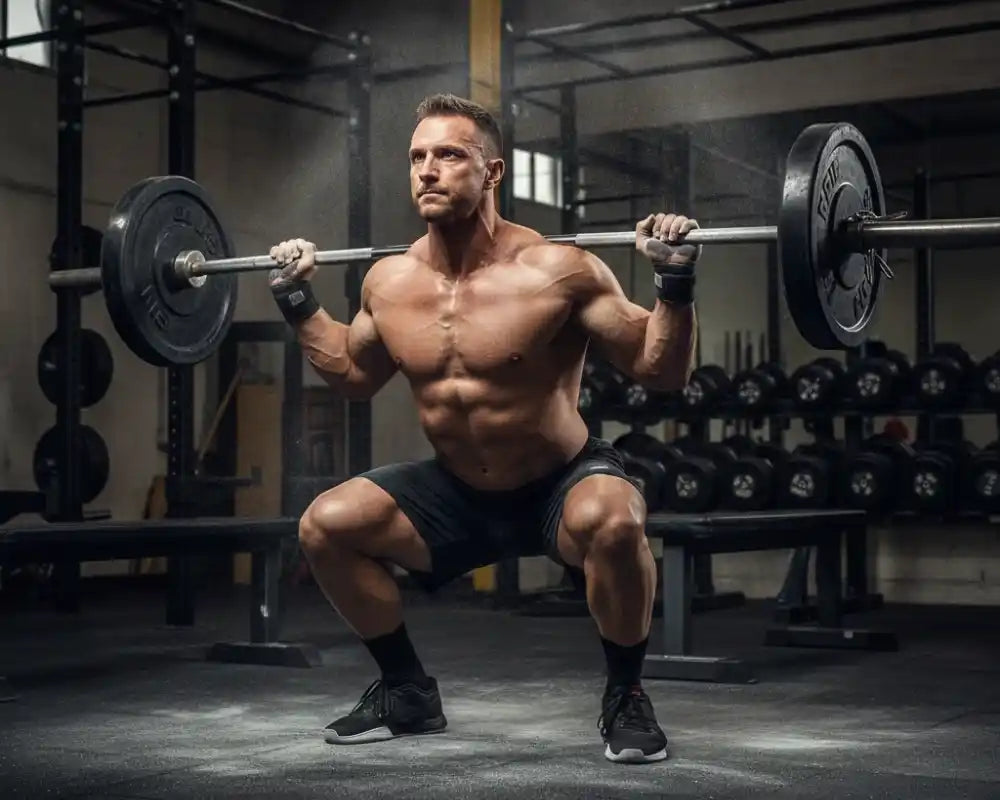
- Squat: knee over ankle, hip over knee
- Bench/Overhead Press: wrist over elbow, elbow under bar
- Deadlift (priority lift): shoulders in line over midfoot, spine in neutral position
Proper stacking minimizes shear stress and ligament strain.
Misalignment is one of the primary causes of knee, shoulder, and wrist pain in lifters.
Common Joint-Stacking Mistakes
- Knees collapsing inward
- Wrist cocked back underneath the bar
- Elbows flaring excessively during presses
- Hips rise faster than the chest in squats
Discomfort is often a sign we've lost our way, lost our alignment.
Rule 3: Use Gear as a Biomechanical Tool
Supportive gear isn't about ego or shortcuts.
It's about reinforcing good mechanics when fatigue sets in.
Gear should:
- Improve stability
- Provide feedback
- Reduce joint stress under load
Wrist Wraps: Build a stronger pressing platform
The wrist is a small, vulnerable joint.
Under heavy pressure, even slight bending increases joint stress.
Quality wrist wraps will help lock your wrists into a neutral, stacked position so force travels through the arm rather than collapsing at the joint.
Knee Sleeves: Proprioception and Warmth
Knee sleeves do more than compress.
They:
- Increase blood flow
- Improve joint warmth
- Enhance proprioception (joint position awareness)
Research shows compression gear can improve joint tracking, especially under fatigue.
Lifting Belts: Amplify Proper Bracing
A belt is not a back crutch.
It gives your abs something to brace against, dramatically increasing intra-abdominal pressure.
Studies published in Medicine & Science in Sports & Exercise show belts can increase this pressure by 15–40%, reducing spinal stress during heavy lifts.
Your Next Step for Joint-Safe Training
By taking care of your joints, you can:
- Train heavier with confidence
- Recover faster
- Stay consistent long-term
Joint-safe lifting isn't about doing less.
It's about doing things correctly.
When bracing is solid, joints are stacked, and support gear reinforces both, lifting stops feeling fragile and progress resumes.
Ready to lift smarter? Enhance your joint-friendly toolkit with BodyReapers. Check out our Lifting Belts, Wrist Wraps & Knee Sleeves designed for performance, not just looks!
Recommended Gear


Leave a comment
This site is protected by hCaptcha and the hCaptcha Privacy Policy and Terms of Service apply.